Love this? Save it for later!
Share the inspiration with your friends
“I wasn’t expecting to find a fresh take on Greek salad without onion or garlic while shopping at my local farmer’s market last summer,” I remember telling my friend as we wandered between stalls. There, behind a stack of sun-ripened tomatoes, an elderly vendor handed me a handwritten recipe on a slightly crumpled card. She called it her ‘secret’ FODMAP-friendly Greek salad, perfect for those avoiding onion and garlic but craving that familiar Mediterranean zing.
Honestly, I was skeptical. How could a Greek salad truly shine without those punchy flavors? But I took a chance, gathered the ingredients, and gave it a try one lazy Sunday afternoon. The first bite surprised me — bright, fresh, and bursting with the kind of satisfying textures that make you pause and smile. Maybe you’ve been there too, craving that classic salad but needing a gentler version on your tummy.
Let me tell you, this fresh FODMAP-friendly Greek salad recipe—no onion, no garlic—is now a staple in my kitchen. It’s not just a salad; it’s a little celebration of simplicity, made with care and a few clever twists. Plus, it’s perfect for those who juggle digestive sensitivities but refuse to give up flavor. And hey, if you’re anything like me, you might forget a key ingredient here or there (I once left out the olives entirely—don’t ask), but that’s the beauty of it—it’s forgiving, fuss-free, and always ready to brighten your plate.
Why You’ll Love This Fresh FODMAP-Friendly Greek Salad Recipe
This fresh FODMAP-friendly Greek salad recipe, with no onion and no garlic, is honestly one of those dishes I keep coming back to. It fits into busy days and relaxed weekends alike.
- Quick & Easy: Ready in under 20 minutes—great for a last-minute lunch or side dish.
- Simple Ingredients: No need to hunt down specialty items; the ingredients are mostly pantry staples or easy to find at any market.
- Perfect for Any Occasion: Whether you’re throwing a casual barbecue or just need a refreshing side, this salad fits right in.
- Crowd-Pleaser: Everyone from my skeptical friends to picky eaters gives it a thumbs up.
- Unbelievably Delicious: The balance of crisp cucumber, juicy tomatoes, briny olives, and creamy feta is just spot on.
What makes this Greek salad stand apart from the rest? The absence of onion and garlic might suggest a loss of flavor, but actually, it forces you to focus on the freshness and quality of each component. The dressing is bright and zesty, with a hint of citrus that lifts the entire dish. I also like to toss in fresh herbs like oregano or mint, which adds a unique twist without overwhelming the palate.
This recipe isn’t just food—it’s a little moment of joy, especially if you’ve struggled with FODMAP sensitivities or just want to try something cleaner and lighter without sacrificing that classic Greek vibe. Honestly, it’s one of those recipes that makes you close your eyes and savor each bite, no matter the season.
What Ingredients You Will Need
This fresh FODMAP-friendly Greek salad recipe rests on straightforward ingredients that work harmoniously to deliver crisp texture and bright flavor without fuss.
- Cucumbers: 2 medium English cucumbers, peeled and diced (I prefer English cucumbers for their thin skin and fewer seeds)
- Tomatoes: 3 ripe Roma tomatoes, chopped (firm and juicy, perfect for holding shape)
- Kalamata Olives: ½ cup pitted and halved (I like the Greek Kalamata brand for authentic taste)
- Feta Cheese: 4 ounces, crumbled (look for block feta, preferably sheep’s milk for creamier texture)
- Green Bell Pepper: 1 small, thinly sliced (adds crunch and subtle sweetness)
- Fresh Herbs: 2 tablespoons chopped fresh oregano or mint (optional but highly recommended for freshness)
- Olive Oil: 3 tablespoons extra virgin olive oil (go for a robust, peppery one to add depth)
- Red Wine Vinegar: 1 ½ tablespoons (balances the oil with tang)
- Lemon Juice: 1 tablespoon freshly squeezed (adds a bright citrus note)
- Dried Oregano: 1 teaspoon (for that classic Greek flavor)
- Salt & Pepper: To taste (I use flaky sea salt and freshly cracked black pepper)
Since this salad is designed to be FODMAP-friendly, it omits onion and garlic entirely, which are usual suspects for digestive troubles. Instead, the focus is on fresh herbs and acid for flavor. If you’d like to swap herbs, basil or parsley work nicely. For a dairy-free option, try firm tofu cubes or omit feta altogether.
Equipment Needed
- Large mixing bowl – for tossing the salad ingredients comfortably
- Sharp chef’s knife – essential for cleanly chopping cucumbers and tomatoes
- Cutting board – sturdy and easy to clean
- Measuring spoons and cups – to get the dressing just right
- Small bowl or jar – handy for whisking or shaking the dressing
- Salad servers or tongs – for gentle mixing without mashing the veggies
If you don’t have a whisk, a fork or shaking the dressing in a sealed jar works just as well. I remember once trying to toss this salad with chopsticks (yes, I got a bit messy), so feel free to use whatever works best in your kitchen. Budget-wise, these tools are basic and likely already in your drawer.
Preparation Method
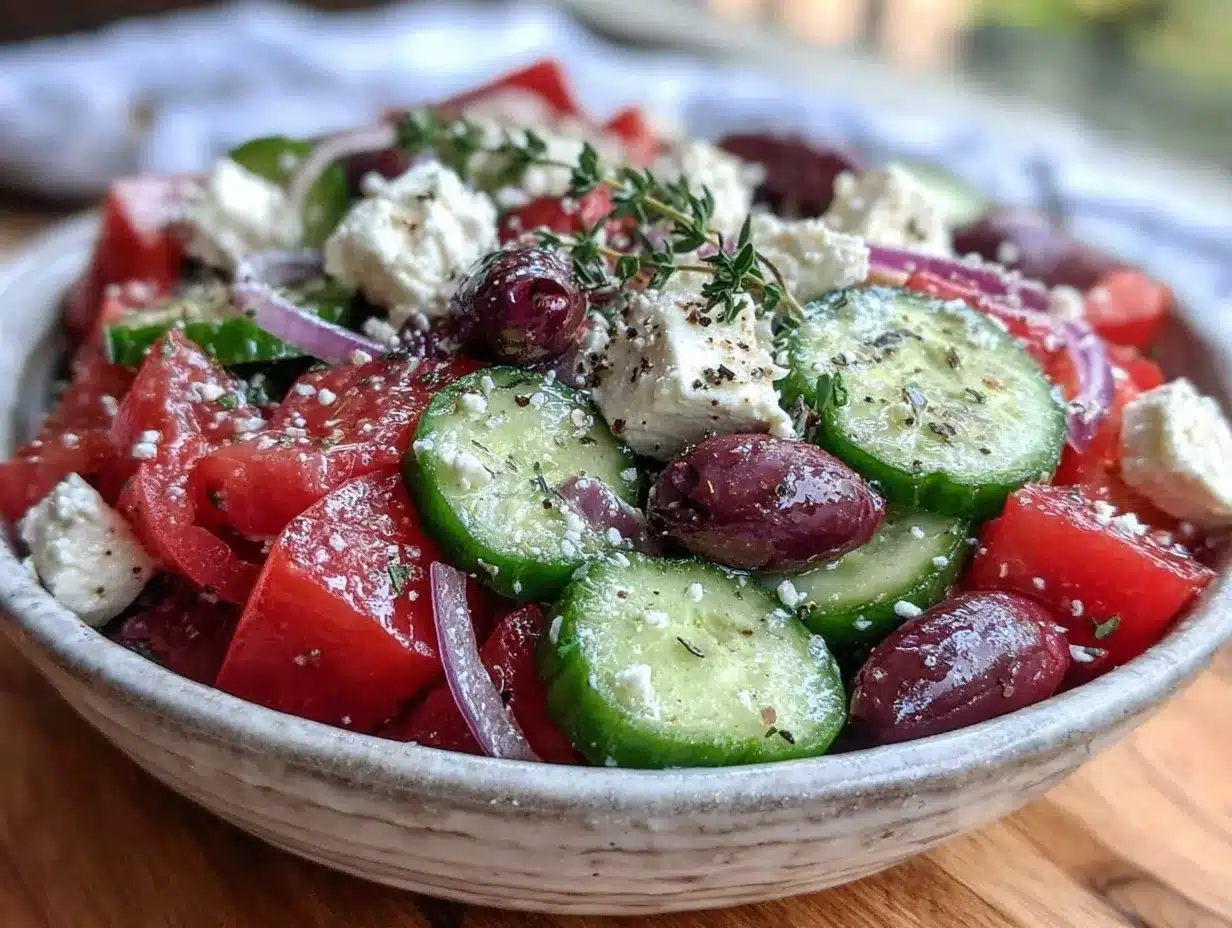
- Prepare the Vegetables (10 minutes): Wash the cucumbers and tomatoes thoroughly. Peel the cucumbers if their skin feels waxy or thick. Dice the cucumbers into roughly ½-inch cubes for a nice crunch. Chop the Roma tomatoes into similar-sized pieces to keep the salad balanced. Thinly slice the green bell pepper into rings or strips. Place all the veggies in your large mixing bowl.
- Add the Olives and Feta (2 minutes): Pit and halve the Kalamata olives if they aren’t already pitted. Crumble the feta cheese into small chunks—not too fine, so you get little pockets of creaminess throughout. Toss both into the bowl with the vegetables.
- Mix the Dressing (3 minutes): In a small bowl or jar, combine the extra virgin olive oil, red wine vinegar, freshly squeezed lemon juice, dried oregano, salt, and pepper. Whisk or shake vigorously until the dressing emulsifies slightly and smells fragrant. Taste and adjust seasoning if needed—sometimes a bit more lemon juice wakes up the flavors.
- Combine and Toss (2 minutes): Pour the dressing over the salad ingredients. Use salad servers or tongs to gently toss everything, making sure each piece is lightly coated without bruising the veggies. Add fresh chopped herbs like oregano or mint if using, folding them in at the end.
- Final Taste and Adjustments (1 minute): Give the salad a quick taste test. Add more salt, pepper, or lemon juice as you prefer. You want a bright, balanced flavor without overpowering any single ingredient.
Pro tip: Letting the salad sit for 5-10 minutes before serving helps the flavors mingle, but honestly, it’s just as tasty right away. If you like a little extra texture, sprinkle a handful of toasted pine nuts or walnuts just before serving.
Cooking Tips & Techniques
Making this fresh FODMAP-friendly Greek salad no onion no garlic isn’t complicated, but a few tips can make it shine every time.
- Use Fresh, Firm Vegetables: I’ve learned that watery or overly ripe tomatoes can make the salad soggy fast. Choose firm but ripe tomatoes and cucumbers for the best crunch.
- Don’t Overdress: Too much dressing weighs down the salad. Start with less, toss, then add more if needed. The goal is a light coating that enhances, not drenches.
- Fresh Herbs Matter: Adding fresh oregano or mint at the end brings a bright herbal note that dried herbs alone can’t match. If you don’t have fresh, double the dried oregano.
- Chill Ingredients: For a crisp salad, keep your veggies chilled until ready to serve. Cold ingredients help the salad feel refreshing, especially on hot days.
- Handling Feta: Crumble feta gently with your fingers instead of a fork for irregular pieces that blend beautifully with the salad textures.
- Timing: Prepare the dressing last to keep it fresh and vibrant. If you make it too early, the oil and vinegar can separate or dull in flavor.
- Multitasking: While veggies are chilling in the fridge, prepare the dressing and crumble the cheese to save time.
One time, I left the dressing out for hours and it tasted a bit flat. Lesson learned: keep it fresh and mix it just before tossing.
Variations & Adaptations
This salad is wonderfully flexible, and you can tweak it to suit your tastes or dietary needs.
- Seasonal Twist: Swap tomatoes for fresh strawberries or watermelon cubes in summer for a fruity twist that still pairs beautifully with feta.
- Protein Boost: Add grilled chicken, shrimp, or chickpeas to make it a full meal. Just be sure the additions fit your FODMAP needs.
- Dairy-Free Option: Omit the feta and sprinkle in toasted pumpkin seeds or diced avocado for creaminess without dairy.
- Cooking Method Adaptation: Roast the bell peppers instead of using them raw for a smoky depth that contrasts the crisp cucumbers and tomatoes.
- Herb Variations: Try swapping oregano for fresh dill or basil for different aromatic profiles.
Personally, I once made this salad using marinated artichoke hearts instead of olives when I ran out, and it was surprisingly delicious—added a tangy, tender bite that worked well.
Serving & Storage Suggestions
This fresh FODMAP-friendly Greek salad is best served chilled or at room temperature. I like to plate it alongside warm pita bread or as a crisp side to grilled meats or fish.
It pairs beautifully with light, citrusy white wines or sparkling water with lemon for a refreshing meal.
To store leftovers, cover the salad tightly and refrigerate for up to 2 days. The cucumbers and tomatoes will release some juice over time, so if you plan to store it longer, keep the dressing separate and toss just before serving.
Reheat? This salad is best fresh, but if you want to enjoy it again, simply bring it to room temperature and give it a quick toss. Flavors meld over time, making it even tastier the next day—if you have leftovers that long!
Nutritional Information & Benefits
This salad is light, nutrient-rich, and gentle on the digestive system thanks to its FODMAP-friendly ingredients.
| Per Serving (approx.) | Calories | Protein | Carbs | Fat |
|---|---|---|---|---|
| 1 cup | 150 kcal | 5 g | 8 g | 12 g |
Rich in antioxidants and vitamins from fresh vegetables, plus healthy fats from olive oil, this salad supports heart health and digestion. Feta adds a good source of calcium and protein. Plus, avoiding onion and garlic helps those with sensitive stomachs enjoy a flavorful meal without discomfort.
Conclusion
So, why make this fresh FODMAP-friendly Greek salad no onion no garlic? Because it combines the joys of fresh Mediterranean flavors with gentle ingredients that don’t upset your stomach. It’s easy to prepare, satisfying, and versatile enough to fit any meal or occasion.
Feel free to make this salad your own—add a sprinkle of your favorite herbs, switch up the veggies, or toss in some protein to suit your mood. Personally, it’s a go-to when I want something refreshing but fuss-free, and I hope it becomes one of your favorites too.
Give it a try, share your tweaks, and let me know how it turns out. I love hearing your kitchen stories!
Frequently Asked Questions About Fresh FODMAP-Friendly Greek Salad No Onion No Garlic
Can I use regular onions and garlic if I am not sensitive?
Absolutely! If you tolerate them well, finely chopped green onions or garlic-infused oil can add extra flavor, but this recipe is designed to be flavorful without them.
Is this salad suitable for vegans?
To make it vegan, simply omit the feta or swap it for a plant-based cheese alternative. The rest of the salad is naturally vegan.
How long can I store this salad in the fridge?
Store it covered in the fridge for up to 2 days. To keep it fresh longer, store the dressing separately and toss just before serving.
What can I use instead of Kalamata olives?
If you’re not a fan, try green olives, capers, or even marinated artichoke hearts for a different briny bite.
Can I prepare this salad ahead of time for a picnic?
Yes, but keep the dressing separate and add it right before serving to avoid soggy veggies. Pack the salad in a sealed container and keep chilled.
Pin This Recipe!
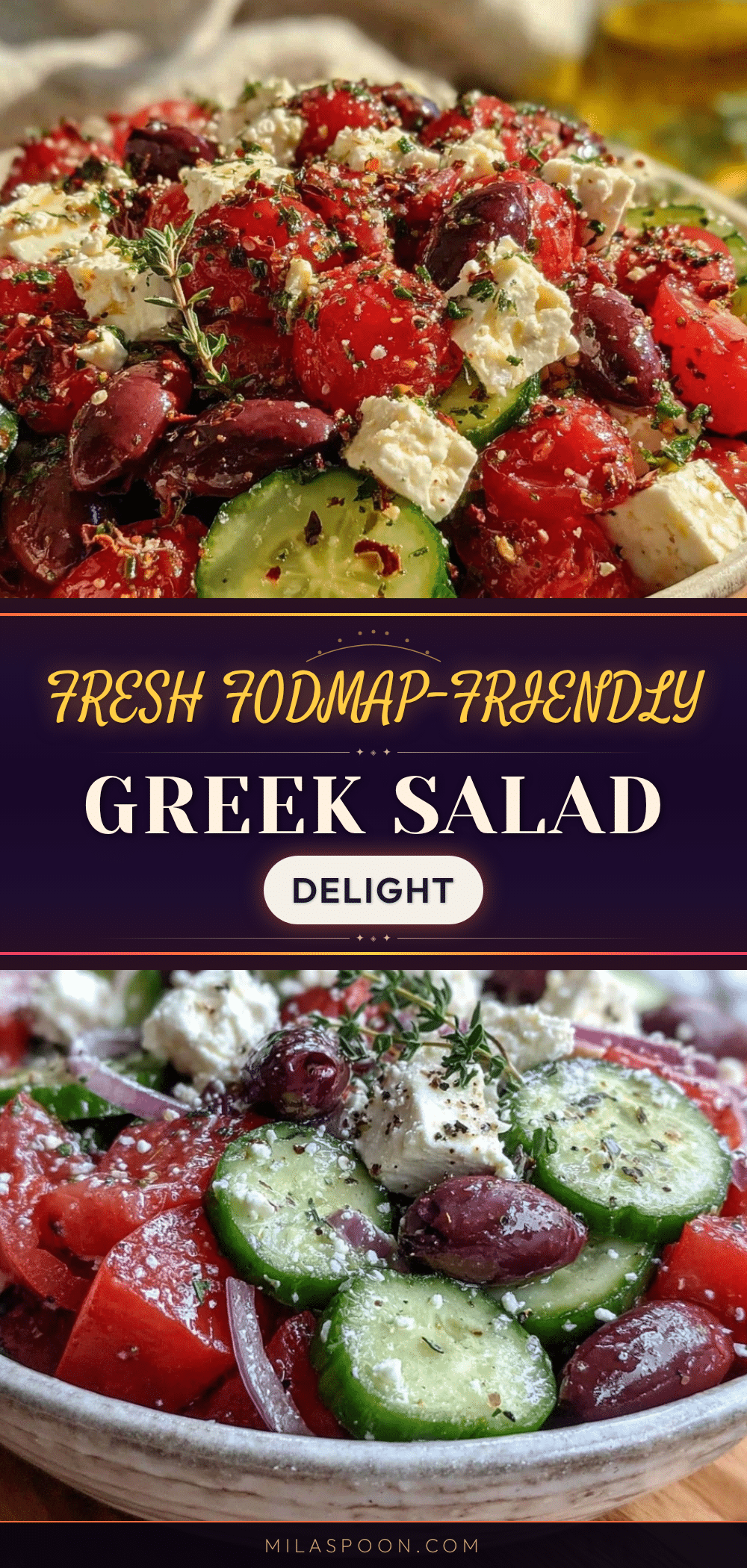
Fresh FODMAP-Friendly Greek Salad Recipe No Onion No Garlic Easy
A fresh and vibrant Greek salad recipe that is FODMAP-friendly, omitting onion and garlic while maintaining classic Mediterranean flavors with crisp vegetables, olives, and feta cheese.
- Prep Time: 10 minutes
- Cook Time: 0 minutes
- Total Time: 18 minutes
- Yield: 4 servings 1x
- Category: Salad
- Cuisine: Greek
Ingredients
- 2 medium English cucumbers, peeled and diced
- 3 ripe Roma tomatoes, chopped
- ½ cup Kalamata olives, pitted and halved
- 4 ounces feta cheese, crumbled
- 1 small green bell pepper, thinly sliced
- 2 tablespoons fresh oregano or mint, chopped (optional)
- 3 tablespoons extra virgin olive oil
- 1 ½ tablespoons red wine vinegar
- 1 tablespoon freshly squeezed lemon juice
- 1 teaspoon dried oregano
- Salt and freshly cracked black pepper, to taste
Instructions
- Prepare the Vegetables (10 minutes): Wash cucumbers and tomatoes thoroughly. Peel cucumbers if skin is thick. Dice cucumbers into ½-inch cubes. Chop Roma tomatoes into similar-sized pieces. Thinly slice green bell pepper. Place all vegetables in a large mixing bowl.
- Add the Olives and Feta (2 minutes): Pit and halve Kalamata olives if needed. Crumble feta cheese into small chunks. Toss olives and feta into the bowl with vegetables.
- Mix the Dressing (3 minutes): In a small bowl or jar, combine olive oil, red wine vinegar, lemon juice, dried oregano, salt, and pepper. Whisk or shake until emulsified and fragrant. Adjust seasoning as needed.
- Combine and Toss (2 minutes): Pour dressing over salad ingredients. Gently toss with salad servers or tongs to coat evenly without bruising vegetables. Fold in fresh herbs if using.
- Final Taste and Adjustments (1 minute): Taste salad and add more salt, pepper, or lemon juice if desired.
Notes
Let the salad sit for 5-10 minutes before serving to allow flavors to meld. Use fresh, firm vegetables to avoid sogginess. Add fresh herbs at the end for best flavor. For dairy-free option, omit feta or substitute with firm tofu or plant-based cheese. Store leftovers in fridge up to 2 days; keep dressing separate for longer storage.
Nutrition
- Serving Size: 1 cup
- Calories: 150
- Sugar: 5
- Sodium: 350
- Fat: 12
- Saturated Fat: 4
- Carbohydrates: 8
- Fiber: 2
- Protein: 5
Keywords: FODMAP-friendly, Greek salad, no onion, no garlic, fresh salad, Mediterranean, healthy, easy recipe