Love this? Save it for later!
Share the inspiration with your friends
I want a bowl of beef stew that tastes like it simmered all day, but I don’t actually want to simmer anything all day. That’s the honest thought running through my head at 2:47 PM on a Tuesday, staring into my fridge like it owes me something. The chuck roast is thawed, the carrots are getting soft, and I have exactly zero patience for browning meat in batches or deglazing pans. So I grab my crockpot, toss everything in, and walk away. This cozy set-and-forget crockpot beef stew came out of that very specific brand of laziness—and honestly, it might be the best decision I’ve made all week.
There’s something almost magical about coming back to a house that smells like dinner already happened. The onions have melted into the broth, the beef is so tender it falls apart with a spoon, and I didn’t lift a finger for any of it. That’s the whole point of this recipe. It’s not complicated, it’s not fussy, and it definitely doesn’t require a culinary degree. It just requires a crockpot, five simple ingredients, and the willingness to let time do the hard work for you.
I first made this on a rainy Sunday when I was supposed to be meal prepping but instead binge-watched an entire season of a cooking competition. I figured if they could make something amazing with limited ingredients, so could I. And you know what? I was right. This beef stew became my go-to for those days when I want comfort food without the comfort-food-level effort. It’s the kind of meal that makes you feel like you have your life together, even if you spent the afternoon in sweatpants.
Why You’ll Love This Recipe
Let me tell you why this particular beef stew is different from every other recipe you’ve bookmarked and never made. First off, it’s genuinely easy. Not “easy” in the way blog recipes claim but actually require fifteen steps and a specialty pan. I’m talking dump-and-go easy. Five ingredients, one crockpot, zero stress.
- Only 5 Ingredients : You don’t need a grocery list that spans two pages. Beef, broth, onion soup mix, carrots, and potatoes. That’s it. You probably have half of these in your pantry right now.
- Set-and-Forget Convenience : Toss everything in before work, run your errands, or take a nap. Eight hours later, dinner is ready. No stirring, no babysitting, no hovering over the stove.
- Budget-Friendly : Chuck roast is one of the most affordable cuts of beef, and the rest of the ingredients cost pennies. This is the kind of meal that stretches your grocery budget without stretching your patience.
- Perfect for Meal Prep : This stew tastes even better the next day. Make it on Sunday and eat well all week. It freezes beautifully too, which is basically a superpower in my book.
- Comfort Food That Delivers : The broth turns rich and silky, the beef becomes spoon-tender, and the vegetables soak up all that savory goodness. It’s the kind of meal that makes you close your eyes after the first bite.
What makes this recipe stand out is the simplicity. I’ve tested versions with red wine, tomato paste, fresh herbs, and all sorts of fancy additions. And you know what? The five-ingredient version wins every single time. There’s no technique to mess up, no timing to stress about, and no complicated flavor balancing. The onion soup mix does the heavy lifting, the beef does the tenderizing, and you get to take all the credit.
This is the recipe I turn to when I need a win in the kitchen. It’s the one I make for friends who say they can’t cook, for busy parents who need dinner handled, and for myself on those days when adulting feels exhausting. It’s not just good—it’s the kind of good that makes you wonder why you ever bothered with complicated recipes in the first place.
What Ingredients You Will Need
This recipe uses simple, humble ingredients that come together to create something far greater than the sum of their parts. No fancy shopping trips, no obscure spices, no specialty items you’ll use once and forget about. Here’s what you need:
- 2 pounds beef chuck roast, cut into 1.5-inch cubes : Chuck is the king of slow-cooking. It has enough marbling to stay moist and tender over long cooking times. Don’t bother with expensive cuts like sirloin or ribeye—they’ll dry out and get tough. I buy my chuck from Costco or a local butcher, and I always look for pieces with good fat distribution. The fat renders down during cooking and adds richness to the broth. If you can’t find chuck, bottom round or brisket work well too. Trim any large pieces of hard fat, but leave the small bits—they add flavor.
- 4 cups low-sodium beef broth : The broth forms the base of your stew, so quality matters. I prefer Swanson or Kitchen Basics for consistent flavor. Low-sodium is important here because the onion soup mix adds plenty of salt. You can adjust seasoning at the end, but you can’t take salt out. If you only have regular broth, reduce the salt in the recipe or use only 3 cups and add water. For a richer flavor, try using half beef broth and half bone broth.
- 1 packet (1 ounce) dry onion soup mix : This is the secret weapon. Lipton is the classic choice, and it works perfectly. The dehydrated onions rehydrate during cooking and add deep savory flavor. The seasonings in the mix—onion powder, garlic powder, a touch of sugar—create a perfectly balanced broth. Don’t skip this. I’ve tried making my own version, and it’s just not the same. Trust the packet on this one.
- 4 large carrots, peeled and cut into 2-inch chunks : Carrots add natural sweetness that balances the savory beef and broth. Cut them into generous chunks so they hold their shape during the long cooking time. Baby carrots work in a pinch, but they tend to get mushy faster. I like to leave a little bit of the peel on for color and texture, but that’s purely aesthetic.
- 3 medium Yukon Gold potatoes, cut into 1.5-inch cubes : Yukon Golds are my go-to for stew because they hold their shape better than russets but get creamier than red potatoes. They absorb the broth without turning to mush. If you prefer a firmer texture, add them halfway through cooking instead of at the beginning. For a lower-carb option, swap in turnips or cauliflower—but honestly, the potatoes are what make it a true stew.
Optional but recommended: 2 tablespoons tomato paste for depth of color and flavor. It’s not one of the five core ingredients, but I add it when I have it on hand. It gives the broth a richer, more complex taste. Also: fresh thyme sprigs or a bay leaf for an aromatic lift. These are nice touches but absolutely not necessary.
I always recommend using fresh vegetables for the best texture. Frozen carrots and potatoes release too much water and can make the stew watery. Fresh produce holds up better over the long cooking time and gives you that satisfying bite.
Equipment Needed
You don’t need a fully stocked kitchen to make this stew. Here’s what you’ll need:
- Crockpot or Slow Cooker (5 to 6 quart) : This is non-negotiable. A 5 to 6 quart size is perfect for this recipe—big enough to hold all the ingredients without overcrowding, but not so big that the liquid evaporates too quickly. I use a basic Crock-Pot brand model I’ve had for years. It’s not fancy, but it gets the job done. If you have a programmable model with a timer, even better. Instant Pot owners can use the slow cook function, but I find the results are slightly different—the heat distribution isn’t as even.
- Chef’s Knife and Cutting Board : A sharp knife makes all the difference when cubing beef and chopping vegetables. You don’t need an expensive set—a decent 8-inch chef’s knife and a sturdy wooden or plastic cutting board will do. Keep your knife sharp for clean cuts that cook evenly. Dull knives crush the meat and create uneven pieces.
- Measuring Cups and Spoons : For measuring broth and any optional ingredients. I use glass measuring cups for liquids and metal spoons for dry ingredients. Nothing fancy needed.
- Large Spoon or Ladle : For stirring and serving. A wooden spoon works great and won’t scratch your crockpot insert. A ladle is perfect for portioning out bowls.
- Optional: Skillet for Searing : I know I said this is a set-and-forget recipe, and it is. But if you have an extra 10 minutes, searing the beef in a hot skillet with a little oil adds incredible depth of flavor. It’s not required, and the stew will still be delicious without it. But if you want that extra layer of richness, grab a cast iron skillet and give the beef a quick brown on all sides before adding it to the crockpot.
I’ve made this stew with a cheap slow cooker I found at a thrift store, and it turned out just as good as the one I made with my fancy programmable model. Don’t let equipment hold you back. If you have a crockpot, you’re ready.
Preparation Method
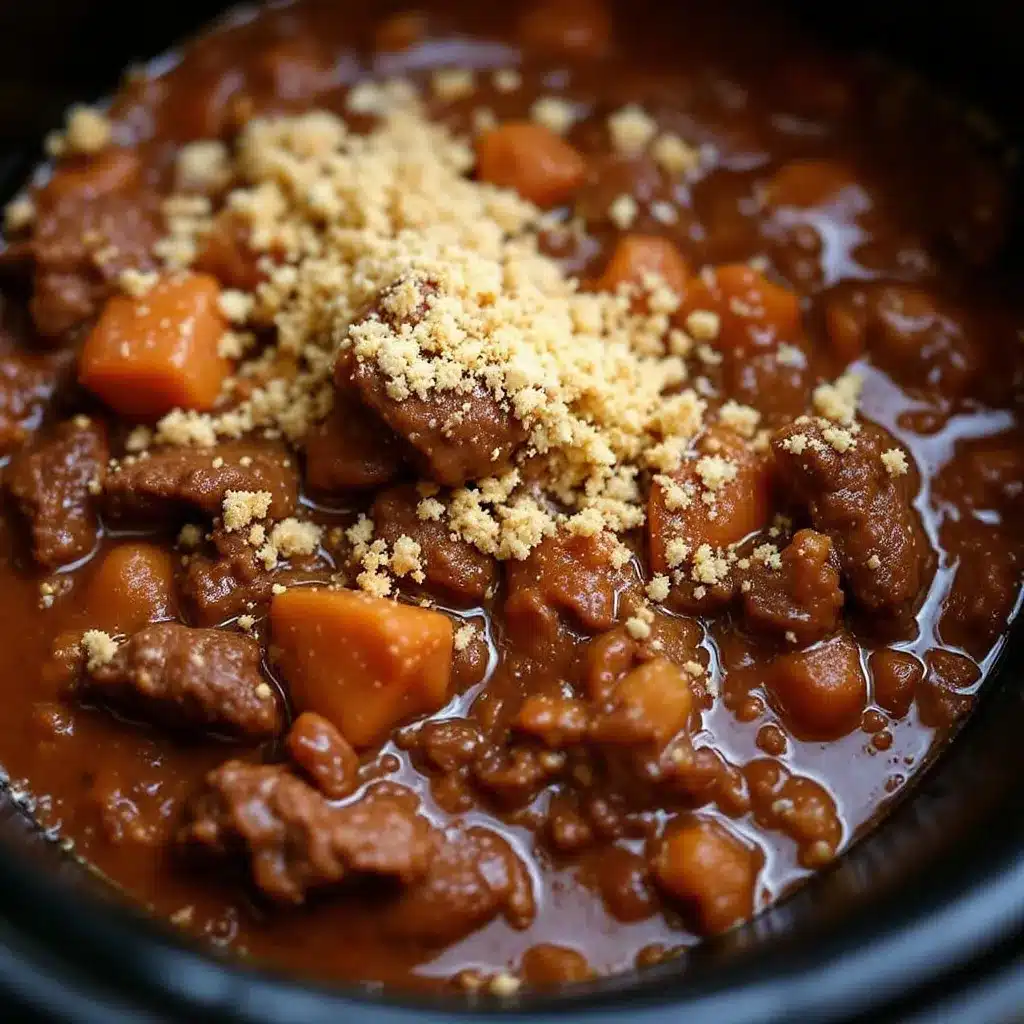
- Prepare the beef : Pat the chuck roast dry with paper towels. This step is important—excess moisture prevents browning if you choose to sear, and it helps the seasoning stick. Cut the beef into 1.5-inch cubes, removing any large pieces of fat or silver skin. Don’t stress about making perfect cubes; rustic chunks are fine. Season lightly with black pepper if desired, but hold off on salt since the onion soup mix adds plenty. (Optional: If you’re searing, heat 1 tablespoon of oil in a skillet over medium-high heat and brown the beef in batches. Don’t crowd the pan—work in two batches if needed. Each side needs about 2-3 minutes for a nice crust. Transfer to the crockpot.)
- Prepare the vegetables : Peel the carrots and cut them into 2-inch chunks. Try to make them roughly the same size for even cooking. Scrub the potatoes well—I leave the skin on for extra texture and nutrients—and cut them into 1.5-inch cubes. If you’re using Yukon Golds, the thin skin is perfectly edible and adds a rustic touch. Place the potatoes in a bowl of cold water to prevent browning while you work. This also removes some excess starch, which helps keep the broth clear.
- Assemble in the crockpot : Place the cubed beef (seared or not) in the bottom of the crockpot. Add the carrots and potatoes on top. Don’t stir yet—layering the ingredients helps them cook evenly. The beef on the bottom gets the most direct heat, which helps it become tender. The vegetables on top steam gently and hold their shape better.
- Add the liquid : In a separate bowl or large measuring cup, whisk together the beef broth and dry onion soup mix until the soup mix is mostly dissolved. There will be some small bits of dried onion floating around—that’s fine. Pour the mixture over the beef and vegetables. The liquid should come about halfway up the ingredients—not fully submerge them. If it looks too low, add a splash more broth or water. If it looks too high, that’s okay too; the stew will reduce slightly during cooking.
- Cook low and slow : Cover the crockpot with the lid and set it to LOW for 8 hours. Do not open the lid during cooking—every time you lift it, you release heat and add 20-30 minutes to the cooking time. I know it’s tempting to peek, but resist. If you’re short on time, you can cook on HIGH for 4-5 hours, but the beef won’t be quite as tender and the flavors won’t develop as deeply. Low and slow is the way to go for that melt-in-your-mouth texture.
- Check for doneness : After 8 hours, the beef should be fork-tender—meaning you can break it apart with a fork with minimal effort. The carrots should be soft but not mushy, and the potatoes should be creamy on the inside but holding their shape. If the beef is still tough, let it cook another 30-60 minutes. Every crockpot runs a little differently, so trust your senses more than the timer.
- Finish and serve : Taste the broth and adjust seasoning if needed. I usually add a pinch of black pepper and sometimes a splash of Worcestershire sauce for extra depth. If you want a thicker stew, mix 2 tablespoons of cornstarch with 2 tablespoons of cold water to make a slurry, stir it into the stew, and let it cook uncovered for 15-20 minutes. Ladle into bowls and serve hot. The stew will thicken slightly as it cools.
One thing I’ve learned the hard way: don’t rush the cooking time. I once tried to speed things up by cooking on HIGH for 4 hours, and the beef was edible but not amazing. It lacked that silky, fall-apart texture that makes slow-cooked stew so satisfying. Give it the full 8 hours on LOW, and you’ll be rewarded with something truly special.
Cooking Tips & Techniques
I’ve made this stew more times than I can count, and I’ve learned a few things along the way. Here are my best tips for getting it right every time:
Don’t skip the searing step if you have time. I know I said this is a set-and-forget recipe, and it absolutely is. But the difference between seared and unseared beef is noticeable. Searing creates a brown crust through the Maillard reaction, which adds layers of savory, almost nutty flavor that you just can’t get from slow cooking alone. The stew is still good without it—I’ve made it both ways—but searing takes it from good to restaurant-quality. If you’re short on time or energy, don’t stress about it. The onion soup mix does a lot of heavy lifting.
Cut your vegetables to the right size. This matters more than you think. Cut them too small, and they’ll disintegrate into mush by hour six. Cut them too large, and they’ll be crunchy and undercooked when the beef is ready. Aim for 1.5 to 2-inch chunks for both carrots and potatoes. They should be big enough to hold their shape but small enough to cook through in the same time as the beef.
Layer ingredients strategically. The beef goes on the bottom because it needs the most direct heat to break down connective tissue. The vegetables go on top because they cook faster and benefit from the steam. If you mix everything together, the potatoes on the bottom might burn while the beef on top stays tough. Trust the layering method—it works.
Resist the urge to open the lid. I know it’s hard. The house smells amazing, and you want to check on it. But every time you lift that lid, you lose heat and add significant cooking time. If you absolutely must check, do it quickly and close the lid immediately. Better yet, use a crockpot with a clear glass lid so you can see without opening.
Season at the end, not the beginning. The onion soup mix is salty, and the beef broth adds more sodium. If you season at the start, you might end up with an overly salty stew. Taste it after 8 hours, then add salt, pepper, or other seasonings as needed. This is especially important if you’re using regular (not low-sodium) broth.
One mistake I made early on: I added too much liquid. I thought the stew needed to be fully submerged, but that just made it watery and bland. The ingredients should be about halfway covered by liquid. As they cook, they release their own juices, creating a rich, concentrated broth. If you add too much liquid, you’ll end up with beef soup instead of beef stew.
Variations & Adaptations
This recipe is incredibly flexible. Here are some ways to make it your own:
Gluten-Free Version : Most dry onion soup mixes contain gluten, but there are gluten-free brands available. Look for Simply Organic or make your own blend using dried onion flakes, garlic powder, onion powder, and a touch of sugar. The rest of the ingredients are naturally gluten-free, so this is an easy swap.
Low-Carb / Keto Adaptation : Swap the potatoes for cauliflower florets or turnips. Add them halfway through cooking so they don’t get too soft. You can also add extra carrots or celery for bulk. The beef and broth are already low-carb friendly, so this is mostly about the vegetable swap. I’ve made this with cauliflower, and it’s surprisingly good—the cauliflower absorbs the broth flavor beautifully.
Herb-Infused Version : Add 2-3 sprigs of fresh thyme, a bay leaf, and a sprig of rosemary to the crockpot before cooking. Remove them before serving. This adds an aromatic, earthy quality that pairs perfectly with the beef. I do this when I’m feeling fancy or when I have fresh herbs from my garden.
Red Wine Version : Replace 1 cup of the beef broth with a dry red wine like Cabernet Sauvignon or Merlot. The wine adds acidity and depth, balancing the richness of the beef. Add the wine at the beginning so the alcohol cooks off. This is my favorite variation for special occasions or when I want a more sophisticated flavor profile.
Spicy Version : Add 1-2 chopped chipotle peppers in adobo sauce or a teaspoon of smoked paprika for a smoky heat. The chipotle adds a subtle warmth that builds as you eat. Start with one pepper and adjust to your tolerance. I’ve done this on cold winter nights, and it’s incredibly satisfying.
Personal variation I love: I sometimes add a handful of frozen peas and a tablespoon of balsamic vinegar in the last 30 minutes of cooking. The peas add a pop of color and sweetness, and the balsamic brightens up the broth. It’s a small touch that makes the stew feel more complete.
Serving & Storage Suggestions
This stew is best served hot, straight from the crockpot. Ladle it into deep bowls and garnish with fresh parsley if you’re feeling fancy. I like to serve it with crusty bread for dipping—a good sourdough or French baguette is perfect for soaking up every last drop of broth. If you want to make it a full meal, pair it with a simple side salad with a tangy vinaigrette to cut through the richness.
For a cozy presentation, serve the stew in bread bowls. Hollow out small round loaves of sourdough, fill them with stew, and use the removed bread for dipping. It’s impressive without being complicated and makes cleanup even easier.
Storage : Let the stew cool completely before transferring to airtight containers. It will keep in the refrigerator for up to 5 days. The flavors actually improve over time as they meld together, so day-old stew is often better than fresh. I usually make a double batch on purpose so I have leftovers for the week.
Freezing : This stew freezes beautifully. Portion it into freezer-safe containers or zip-top bags, leaving about an inch of headroom for expansion. It will keep for up to 3 months. Thaw overnight in the refrigerator before reheating. I like to freeze individual portions for quick lunches—just grab one from the freezer in the morning, and it’s ready by lunchtime.
Reheating : Reheat on the stovetop over medium-low heat, stirring occasionally, until warmed through. You can also microwave individual portions in 30-second intervals, stirring between each. If the stew has thickened too much during storage, add a splash of broth or water to thin it out. The potatoes will have absorbed some liquid, so a little extra broth helps restore the original consistency.
How flavors develop over time: The first day, the stew is good—rich, savory, and comforting. The second day, it’s even better. The flavors have had time to marry, the beef has absorbed more of the broth, and the vegetables have become more infused with the savory goodness. By the third day, it’s basically perfect. I’ve never had it last longer than that because we eat it all, but I imagine it would keep getting better.
Nutritional Information & Benefits
This stew is a balanced meal in a bowl. Here are the approximate nutritional values per serving (based on 6 servings):
| Nutrient | Amount Per Serving |
|---|---|
| Calories | 380 |
| Protein | 35g |
| Fat | 15g |
| Carbohydrates | 28g |
| Fiber | 4g |
| Sugar | 6g |
| Sodium | 680mg |
| Iron | 25% DV |
| Vitamin A | 120% DV |
| Vitamin C | 15% DV |
Beef chuck is an excellent source of protein, iron, and B vitamins, which support energy metabolism and red blood cell production. Carrots are packed with beta-carotene, which your body converts to vitamin A for healthy vision and immune function. Potatoes provide potassium and vitamin C, along with resistant starch that supports gut health when cooled and reheated.
This recipe is naturally dairy-free, egg-free, and nut-free. For a gluten-free version, use a certified gluten-free onion soup mix. It’s also easily adaptable for low-carb diets by swapping potatoes for lower-carb vegetables. The high protein content makes it a satisfying meal that keeps you full for hours.
I love that this stew feels indulgent but is actually quite nutritious. It’s the kind of meal that nourishes your body while comforting your soul, and that’s a rare combination.
Conclusion
This cozy set-and-forget crockpot beef stew is proof that you don’t need a dozen ingredients or hours of active cooking to make something truly delicious. It’s the recipe I turn to when I need a win, when I’m short on time but craving comfort, and when I want to feel like I have my life together even on the messiest of days.
The beauty of this recipe is how forgiving it is. You can swap vegetables, adjust seasonings, or add your own twist, and it will still turn out amazing. It’s a canvas for your creativity, not a rigid formula. And honestly, that’s what cooking should be—flexible, fun, and rewarding.
I’d love to hear how this stew turns out for you. Did you add any fun variations? Serve it with something unexpected? Share your results in the comments below—I read every single one and love seeing your creations. And if you’re looking for more cozy, low-effort meals, check out my easy tender Mississippi pot roast or this creamy one-pan Tuscan chicken for more weeknight dinner inspiration.
Until next time, happy slow cooking. Your future self will thank you.
Frequently Asked Questions
Can I use a different cut of beef for this stew?
Absolutely. Chuck roast is ideal, but bottom round, brisket, or even stew meat from the store will work. Avoid lean cuts like sirloin or tenderloin—they lack the fat and connective tissue needed for tender results after long cooking. If you use a leaner cut, reduce the cooking time slightly and check for doneness earlier.
Can I add other vegetables to this stew?
Yes, and I encourage it. Celery, parsnips, turnips, and mushrooms all work beautifully. Add hearty vegetables like celery and parsnips at the beginning. Add more delicate vegetables like peas or green beans in the last 30 minutes so they don’t get mushy. Just keep the total vegetable volume similar to the original recipe to maintain the right liquid ratio.
Why is my stew watery?
This usually happens for two reasons: too much liquid added at the start, or the lid was opened too often during cooking. Next time, use less broth—the ingredients should only be halfway covered. If your stew is already watery, remove the lid for the last 30-60 minutes of cooking to let some liquid evaporate. You can also stir in a cornstarch slurry (2 tablespoons cornstarch mixed with 2 tablespoons cold water) and cook for another 15 minutes to thicken it.
Can I cook this on HIGH instead of LOW?
You can, but I don’t recommend it. Cooking on HIGH for 4-5 hours will produce edible stew, but the beef won’t be as tender and the flavors won’t develop as deeply. The low, slow heat is what breaks down the collagen in the chuck roast, giving you that melt-in-your-mouth texture. If you’re in a hurry, it’s better to use a pressure cooker than to rush the slow cooker.
How do I make this stew thicker?
There are several ways. The easiest is to mix 2 tablespoons of cornstarch with 2 tablespoons of cold water to make a slurry, then stir it into the stew during the last 30 minutes of cooking. You can also mash some of the potatoes against the side of the crockpot to release their starch, which naturally thickens the broth. For a gluten-free option, use arrowroot powder instead of cornstarch.
Pin This Recipe!
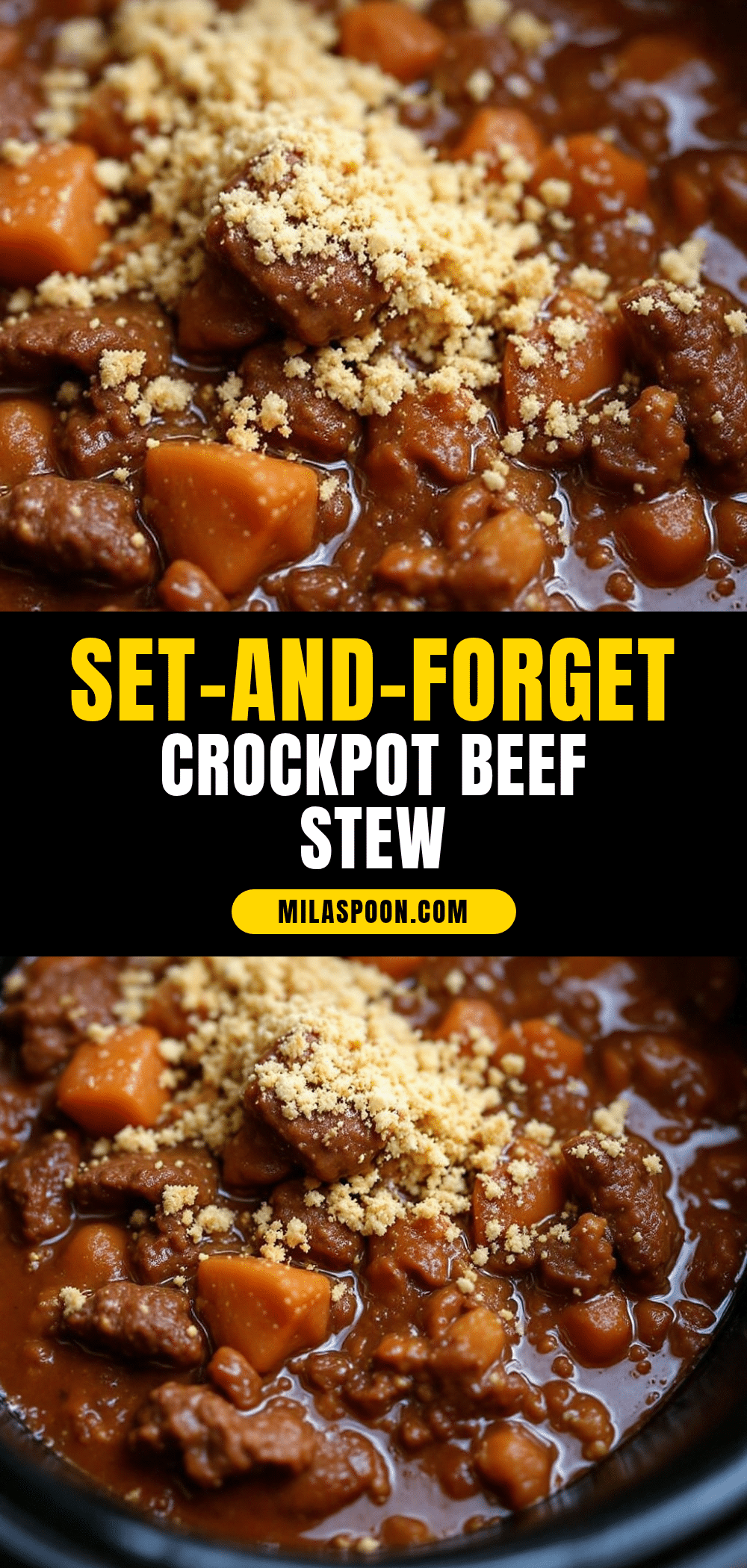
Cozy Set-and-Forget Crockpot Beef Stew: Easy 5-Ingredient Meal
A simple, dump-and-go beef stew made with just five ingredients in a crockpot. Perfect for busy days when you want comfort food without the effort.
- Prep Time: 15 minutes
- Cook Time: 8 hours
- Total Time: 8 hours 15 minutes
- Yield: 6 servings 1x
- Category: Main Course
- Cuisine: American
Ingredients
- 2 pounds beef chuck roast, cut into 1.5-inch cubes
- 4 cups low-sodium beef broth
- 1 packet (1 ounce) dry onion soup mix
- 4 large carrots, peeled and cut into 2-inch chunks
- 3 medium Yukon Gold potatoes, cut into 1.5-inch cubes
- 2 tablespoons tomato paste (optional)
- Fresh thyme sprigs or a bay leaf (optional)
Instructions
- Pat the chuck roast dry with paper towels. Cut into 1.5-inch cubes, removing large pieces of fat or silver skin. Season lightly with black pepper if desired. (Optional: Sear beef in a hot skillet with oil for 2-3 minutes per side.)
- Peel carrots and cut into 2-inch chunks. Scrub potatoes and cut into 1.5-inch cubes. Place potatoes in a bowl of cold water to prevent browning.
- Place cubed beef in the bottom of a 5-6 quart crockpot. Add carrots and potatoes on top.
- In a separate bowl, whisk together beef broth and dry onion soup mix until mostly dissolved. Pour over beef and vegetables. Liquid should come about halfway up the ingredients.
- Cover and cook on LOW for 8 hours. Do not open the lid during cooking.
- After 8 hours, check that beef is fork-tender and vegetables are soft. If beef is still tough, cook another 30-60 minutes.
- Taste broth and adjust seasoning if needed. For a thicker stew, mix 2 tablespoons cornstarch with 2 tablespoons cold water, stir into stew, and cook uncovered for 15-20 minutes. Ladle into bowls and serve hot.
Notes
For best results, cook on LOW for 8 hours. Searing the beef adds depth of flavor but is optional. Do not open the lid during cooking. Season at the end to avoid over-salting. The stew thickens as it cools.
Nutrition
- Serving Size: 1 serving (about 1.5
- Calories: 380
- Sugar: 6
- Sodium: 680
- Fat: 15
- Saturated Fat: 5
- Carbohydrates: 28
- Fiber: 4
- Protein: 35
Keywords: crockpot beef stew, easy beef stew, 5-ingredient stew, slow cooker stew, comfort food, set-and-forget