Love this? Save it for later!
Share the inspiration with your friends
I figured sticky honey garlic salmon bites would be one of those recipes that looked impressive on Instagram but fell apart in an actual kitchen. It took about three minutes of the sauce hitting the hot pan for that assumption to fall apart completely. The honey started bubbling, the garlic hit the oil, and the smell—honestly, it stopped me mid-step. I wasn’t even hungry yet, and suddenly I was.
The idea came from a weeknight where I had a single salmon fillet thawing on the counter and absolutely no plan. No side dish prepped, no fancy marinade, no energy for anything complicated. I wanted something fast but not boring, sticky but not cloying, and I wanted it to feel like a real meal, not a compromise. So I grabbed the honey, the soy sauce, and a clove of garlic that was starting to sprout (we’ve all been there), and I just started winging it.
What came together in that skillet was better than anything I’d planned. The salmon stayed tender in the center, the sauce reduced into this glossy coating that clung to every piece, and the whole thing took maybe fifteen minutes from start to finish. I ate it standing over the counter, straight from the pan, which I think tells you everything you need to know.
This recipe stuck because it proved me wrong. It’s not fussy or precious. It’s the kind of dinner you make when you’re tired and hungry and you need something that actually delivers without a grocery list or a pep talk. And honestly, that’s the best kind of recipe to have in your back pocket.
Why You’ll Love This Recipe
Let me tell you why this one earns a permanent spot in your weekly rotation. I’ve made these sticky honey garlic salmon bites more times than I can count, and every single time, they deliver exactly what you want from a weeknight dinner: speed, flavor, and zero drama.
- Quick & Easy: From start to finish, you’re looking at about 20 minutes. No marinating required, no complicated techniques. Just chop, toss, and cook.
- Simple Ingredients: You probably have most of this in your pantry right now. Honey, soy sauce, garlic, salmon. That’s really the heart of it.
- Perfect for Busy Weeknights: This is the recipe you turn to when you walked in the door late, everyone’s hungry, and takeout sounds depressing. It saves the night every time.
- Crowd-Pleaser: I’ve served these to kids, to adults, to picky eaters, and to people who “don’t really like salmon.” The sticky-sweet glaze wins everyone over.
- Unbelievably Delicious: The texture is what gets me. The outside gets this caramelized, slightly chewy coating while the inside stays tender and flaky. It’s comfort food that feels a little fancy but takes almost no effort.
What makes this version different from the dozens of other honey garlic salmon recipes out there? It’s the balance. I spent a few rounds getting the honey-to-soy ratio just right—not too sweet, not too salty, with enough garlic to taste it without it overwhelming everything. The technique matters too. You cook the salmon bites in batches so they brown instead of steam, and you let the sauce reduce right in the pan until it gets that perfect sticky consistency. No cornstarch slurry needed, no extra steps. Just patience and a hot pan.
This recipe is the kind that makes you close your eyes after the first bite. It’s quick enough for a Tuesday but good enough to serve to company without feeling embarrassed. Honestly, it’s the best version of itself, and I don’t say that lightly.
What Ingredients You Will Need
This recipe uses simple, mostly pantry-friendly ingredients to create something that tastes far more complex than it is. Here’s what you’ll need and why each one matters.
- Salmon fillet (1 to 1.5 pounds), skin removed, cut into 1-inch cubes: I prefer wild-caught salmon when I can find it, but farm-raised works beautifully here too. The key is getting a fresh fillet that doesn’t smell fishy. Look for bright orange flesh with clean white fat lines. If you’re using frozen, thaw it completely in the fridge overnight and pat it very dry before cutting.
- Honey (¼ cup): This is the backbone of the glaze. Use a good-quality honey—I like a mild wildflower or clover honey here. Avoid anything too strongly flavored like buckwheat honey, which can overpower the salmon. Local honey is always a nice touch if you have it.
- Soy sauce (3 tablespoons): Regular soy sauce works perfectly. If you’re gluten-free, swap in tamari or coconut aminos. Low-sodium soy sauce is fine too, but you might want to add a tiny pinch of salt to the salmon before cooking.
- Garlic (4 cloves), minced: Fresh garlic is non-negotiable here. The jarred stuff won’t give you the same punch. I mince mine finely so it melts into the sauce rather than leaving chunky bits.
- Rice vinegar (1 tablespoon): This adds a subtle tang that cuts through the sweetness and keeps the glaze from being cloying. You can substitute apple cider vinegar in a pinch.
- Sesame oil (1 teaspoon): A little goes a long way. It adds a nutty, toasty note that makes the whole dish feel more complete. Don’t skip it—it’s a small amount but it makes a real difference.
- Cornstarch (1 tablespoon): This is for coating the salmon bites before cooking. It helps create that slightly crispy exterior that holds onto the glaze so beautifully.
- Neutral oil (2 tablespoons), like avocado or grapeseed oil: You need a high smoke point oil for searing. Olive oil will burn here, so stick with something neutral.
- Salt and black pepper: Just a light seasoning on the salmon before you coat it in cornstarch.
- Optional garnishes: Sliced green onions, toasted sesame seeds, and a squeeze of fresh lime juice. These aren’t just for looks—they add freshness and brightness that balances the rich, sticky glaze.
I recommend using a brand like Bragg’s for soy sauce or Rise Farm for honey—both are reliable and consistently good. For the salmon, if you can find Pescatarian or Wild Planet frozen fillets, they’re excellent quality and often more affordable than fresh.
Equipment Needed
You don’t need much for this recipe, which is part of the appeal. Here’s what I use every time.
- Large nonstick skillet or well-seasoned cast iron pan: A 12-inch skillet gives you enough room to cook the salmon in batches without overcrowding. I’ve used both, and honestly, the nonstick makes cleanup a breeze when that honey glaze inevitably caramelizes onto the pan.
- Sharp knife and cutting board: For cubing the salmon and mincing the garlic. A dull knife will crush the salmon instead of cutting it cleanly.
- Mixing bowls: One for tossing the salmon with cornstarch, one small bowl for whisking the sauce ingredients together.
- Tongs: For flipping the salmon bites without breaking them apart.
- Small whisk or fork: For mixing the sauce.
- Paper towels: For patting the salmon dry—this step is more important than you think.
If you don’t have a nonstick skillet, a well-seasoned cast iron pan works beautifully. Just make sure it’s hot enough before you add the oil. And if you’re short on time, you can skip the separate mixing bowl for the sauce and just whisk it together in a measuring cup. I’ve done that plenty of times and it works fine.
Preparation Method

Let me walk you through this step by step. I’ve made this recipe dozens of times, and these are the exact steps that work best.
- Prep the salmon. Start by patting your salmon fillet dry with paper towels. This is crucial—wet salmon won’t brown, and it’ll steam instead of sear. Cut the fillet into 1-inch cubes, trying to keep them as uniform as possible so they cook evenly. Season the cubes lightly with salt and pepper.
- Coat in cornstarch. Place the salmon cubes in a bowl and sprinkle the cornstarch over them. Toss gently with your hands or a spoon until each piece is lightly coated. Shake off any excess—you want a thin, even layer, not a thick crust. Set the coated salmon aside while you make the sauce.
- Make the sauce. In a small bowl, whisk together the honey, soy sauce, minced garlic, rice vinegar, and sesame oil. Set it near the stove so it’s ready to go when you need it.
- Heat the pan. Place your skillet over medium-high heat and add 1 tablespoon of the neutral oil. Let it heat until it shimmers—about 2 minutes. You want the pan hot enough that the salmon sizzles immediately when it hits the oil.
- Sear the salmon in batches. Add half the salmon cubes to the pan in a single layer, making sure they’re not touching. Let them cook undisturbed for 2 to 3 minutes until the bottoms are golden brown and crispy. Flip each piece with tongs and cook for another 2 to 3 minutes on the other side. The salmon should be cooked through but still tender in the center—about 4 to 5 minutes total depending on the size of your cubes. Transfer the cooked salmon to a plate and repeat with the remaining oil and salmon.
- Make the glaze. Once all the salmon is cooked, reduce the heat to medium-low and pour the sauce into the now-empty skillet. It will bubble and steam immediately—that’s good. Let it simmer for about 2 minutes, stirring constantly, until it thickens slightly and becomes glossy. You’ll notice it coating the back of a spoon.
- Toss the salmon in the glaze. Return all the cooked salmon bites to the skillet. Using tongs or a spatula, gently toss them in the sauce until every piece is evenly coated. Let them cook in the glaze for another 30 seconds to 1 minute, just until the sauce clings to the salmon and gets slightly sticky. Don’t let it cook too long or the sauce can burn.
- Finish and serve. Remove the pan from the heat immediately. Transfer the salmon bites to a serving plate and sprinkle with sliced green onions, toasted sesame seeds, and a squeeze of fresh lime juice if you’re using them. Serve hot.
A few things I’ve learned the hard way: If your pan isn’t hot enough, the salmon will stick and the cornstarch coating will come off. If it’s too hot, the honey in the sauce can burn quickly when you add it back. Medium-low heat for the glaze step is your friend. Also, don’t overcrowd the pan when searing—steam is the enemy of crispy edges. Two batches is worth the extra minute.
You’ll know the salmon is done when it flakes easily with a fork but still feels moist in the center. The glaze should be thick enough that it doesn’t run off the salmon when you lift a piece. If it seems too thin, let it simmer for another 30 seconds. If it seems too thick, add a teaspoon of water to loosen it up.
Cooking Tips & Techniques
I’ve burned my fair share of honey garlic sauce, and I’ve learned a few things along the way that I wish someone had told me sooner.
Pat the salmon dry. I cannot overstate this. Moisture is the enemy of a good sear. If your salmon is even slightly wet, it will steam in the pan instead of browning, and you’ll end up with pale, sad bites instead of golden, crispy ones. Take the extra 30 seconds to really dry them off.
Use a hot pan. A medium-high heat that makes the oil shimmer is exactly what you need. If you’re not sure, flick a drop of water into the pan—if it sizzles and evaporates immediately, you’re ready. If it just sits there, wait another minute.
Don’t crowd the pan. This is the mistake I made the first three times. I wanted to get it all done in one batch, so I piled the salmon in. Big mistake. The temperature dropped, the salmon released moisture, and I ended up with steamed fish. Two batches is the way to go. It takes an extra 4 minutes and makes all the difference.
Watch the glaze carefully. Honey burns faster than you think. Once you add the sauce to the pan, keep stirring and don’t walk away. The second it starts to smell caramelized and looks thick and glossy, it’s ready. Another 15 seconds and it could be bitter and burnt.
Timing strategy: I like to prep all my garnishes and have my serving plate ready before I start cooking. This recipe moves fast once you begin, and you don’t want to be hunting for sesame seeds while your glaze is burning. Set everything up first, then cook.
One more thing—if you’re doubling the recipe, use two pans or cook in three batches. The glaze will thicken too much if you try to do too much at once, and you’ll end up with a sticky mess instead of a glossy coating.
Variations & Adaptations
This recipe is flexible, and I’ve tried several variations over the years. Here are some of my favorites.
Spicy Honey Garlic Salmon Bites: Add 1 teaspoon of sriracha or gochujang to the sauce before cooking. The heat cuts through the sweetness beautifully and gives it a little kick. I’ve also tried adding red pepper flakes, but the sriracha version is my favorite.
Air Fryer Version: If you want to skip the stovetop, you can air fry the salmon bites. Preheat your air fryer to 400°F. Lightly spray the basket with oil, arrange the coated salmon cubes in a single layer (work in batches), and cook for 6 to 8 minutes, shaking halfway through. Then toss the cooked salmon in the glaze made separately in a small saucepan. The texture is slightly different—crispier on the outside—but still delicious.
Low-Sodium Option: Use low-sodium soy sauce or coconut aminos and reduce the added salt. The honey and garlic still provide plenty of flavor, so you won’t miss the salt.
Herb Variation: Add a tablespoon of fresh chopped cilantro or basil to the finished dish. It adds a fresh, bright note that complements the sticky glaze. I tried this on a whim one summer and it worked surprisingly well.
Different Protein: This glaze works beautifully on chicken thighs or even tofu. For chicken, cut boneless, skinless thighs into bite-sized pieces and cook them a few minutes longer until they’re cooked through. For tofu, use extra-firm, press it well, and follow the same cornstarch coating and searing method.
Grain-Free: Serve the salmon bites over cauliflower rice or a bed of sautéed greens instead of regular rice. The glaze is naturally gluten-free if you use tamari, and the dish holds up beautifully without grains.
If you’re cooking for someone with a sesame allergy, simply skip the sesame oil and sesame seeds. The dish will still be delicious—just a little less nutty. And if you’re avoiding honey, you can substitute maple syrup, though the flavor will be slightly different and the glaze might be a touch thinner.
Serving & Storage Suggestions
These sticky honey garlic salmon bites are best served hot, right after you toss them in the glaze. The texture is at its peak when the outside is sticky and the inside is tender. I like to serve them over steamed jasmine rice or alongside a simple cucumber salad for freshness. If you’re looking for something heartier, try them with roasted broccoli or a side of crunchy Asian sesame cucumber noodle salad —the cool, crisp texture pairs perfectly with the warm, sticky salmon.
For presentation, I pile the salmon bites on a platter, drizzle any remaining glaze from the pan over the top, and sprinkle generously with sesame seeds and sliced green onions. A few lime wedges on the side let everyone add a squeeze of brightness at the table. If you’re serving a crowd, these also work beautifully as an appetizer—just stick a toothpick in each bite and arrange them on a board.
Storage: Leftovers keep well in an airtight container in the refrigerator for up to 3 days. The glaze will lose its sticky texture and become more of a coating, but the flavor remains excellent. I don’t recommend freezing these—the salmon can become dry and the glaze can separate when thawed.
Reheating: The best way to reheat is in a skillet over medium-low heat with a splash of water. Add the salmon bites and a tablespoon of water to the pan, cover, and warm for 2 to 3 minutes, shaking the pan occasionally. The water helps rehydrate the glaze and keeps the salmon from drying out. You can also microwave them in 30-second bursts, but the texture won’t be as good.
One thing I’ve noticed—the flavors actually meld together nicely overnight. The garlic mellows out, the honey soaks in a bit more, and the whole thing tastes even more cohesive the next day. I’ve been known to make extra on purpose just for lunch the following day.
Nutritional Information & Benefits
Here’s an approximate nutritional breakdown per serving (based on 4 servings, using the full amount of sauce):
- Calories: 380-420
- Protein: 28-32g
- Fat: 18-22g
- Carbohydrates: 22-26g
- Fiber: 0g
- Sugar: 18-20g (from honey)
Salmon is an excellent source of omega-3 fatty acids, which support heart health and brain function. It’s also rich in high-quality protein, B vitamins, and selenium. The honey provides quick energy, and the garlic offers antibacterial properties and adds depth without extra sodium.
This recipe is naturally gluten-free if you use tamari instead of soy sauce. It’s also dairy-free and nut-free, making it suitable for a wide range of dietary needs. If you’re watching your sugar intake, you can reduce the honey to 3 tablespoons—the glaze will be slightly less sticky but still flavorful.
I personally love that this dish feels indulgent while still being packed with nutrients. It’s the kind of meal that satisfies a craving for something sweet and savory without leaving you feeling heavy. That balance is hard to find, and this recipe nails it every time.
Conclusion
These sticky honey garlic salmon bites are proof that a great dinner doesn’t need to be complicated. With just a handful of ingredients and about 20 minutes, you can create something that tastes like it took far more effort than it actually did. The sweet-savory glaze, the tender salmon, the slightly crispy edges—it’s a combination that works every single time.
I love this recipe because it’s forgiving. It adapts to what you have in your pantry, it works with different proteins, and it always delivers. Whether you’re cooking for a busy family, meal prepping for the week, or just trying to get dinner on the table without a meltdown, this one has your back.
I’d love to hear how yours turn out. Did you add extra spice? Serve it over rice or noodles? Skip the sesame seeds and go a different direction? Drop a comment below and let me know your favorite variation. And if you loved this recipe, share it with a friend who needs a quick dinner win. Happy cooking!
Frequently Asked Questions
Can I use frozen salmon for this recipe?
Yes, absolutely. Just make sure to thaw it completely in the refrigerator overnight and pat it very dry with paper towels before cutting and coating. Excess moisture from partially thawed salmon will prevent it from browning properly.
How do I keep the salmon from falling apart in the pan?
The cornstarch coating helps a lot, but the real key is not moving the salmon too soon. Let it cook undisturbed for 2 to 3 minutes on the first side. When the bottom is golden and crispy, it will release easily from the pan. If it’s sticking, it’s not ready to flip yet.
Can I make this recipe ahead of time?
You can prep the ingredients ahead—cut the salmon, mix the sauce, and store them separately in the fridge. But I recommend cooking the salmon bites fresh for the best texture. The glaze loses its stickiness when reheated, so it’s really best enjoyed right after cooking.
What can I serve with these salmon bites?
Steamed jasmine rice is my go-to, but they’re also great over cauliflower rice, quinoa, or a simple green salad. For a heartier meal, try them with roasted vegetables or alongside creamy cucumber dill salad for a cool, refreshing contrast. If you’re in the mood for something cozy, a bowl of roasted tomato basil soup on the side makes for an unexpectedly wonderful pairing.
How do I know when the salmon is cooked through?
Salmon cooks quickly in bite-sized pieces. After about 4 to 5 minutes total in the pan, the cubes should be opaque all the way through and flake easily with a fork. The center should still feel moist, not dry. If you’re unsure, cut one open to check—it should be just barely cooked through with no translucent spots in the middle.
Pin This Recipe!
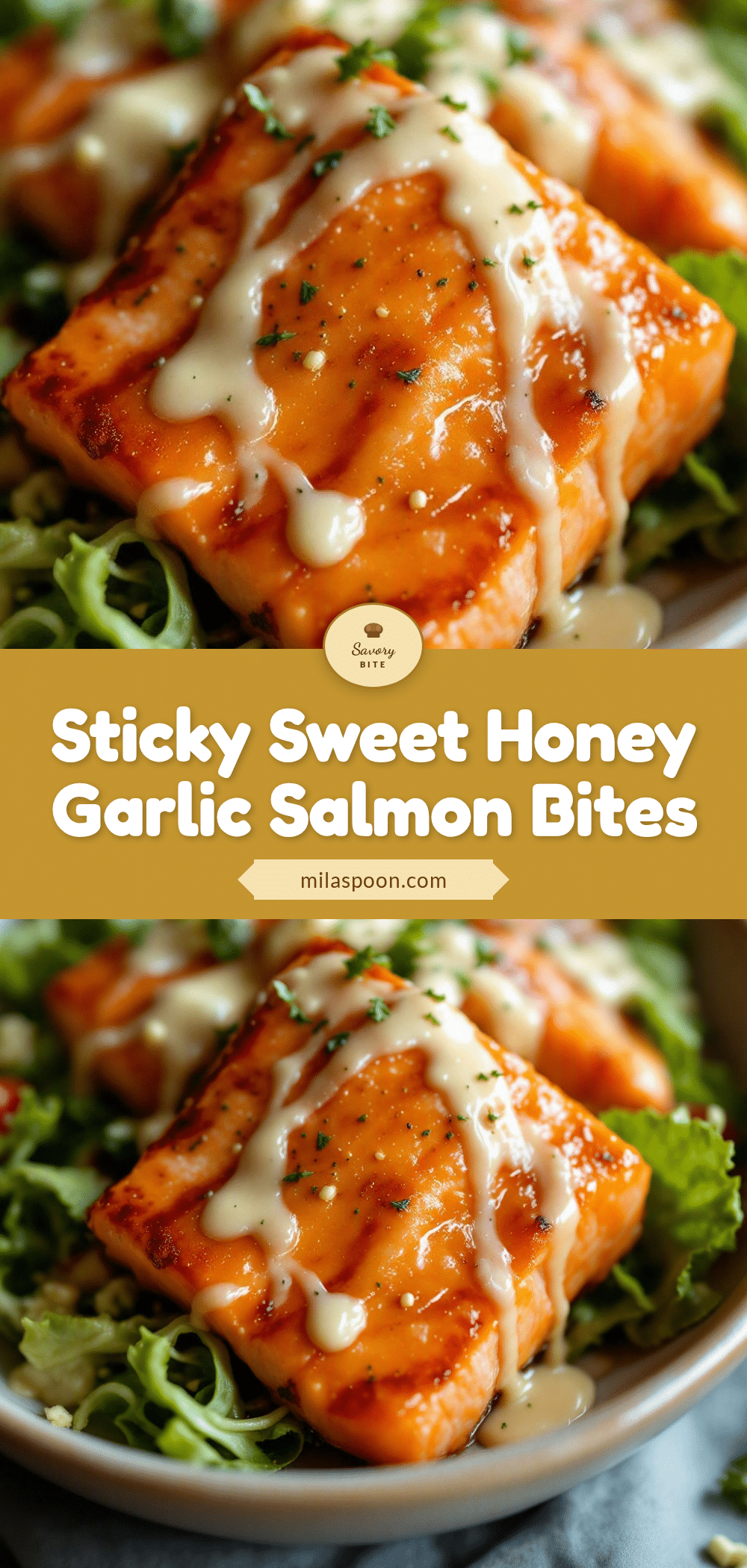
Best Sticky Honey Garlic Salmon Bites Recipe

Quick and easy sticky honey garlic salmon bites with a glossy, caramelized glaze. Ready in about 20 minutes with simple pantry ingredients, perfect for busy weeknights.
- Prep Time: 10 minutes
- Cook Time: 10 minutes
- Total Time: 20 minutes
- Yield: 4 servings 1x
- Category: Main Course
- Cuisine: Asian-inspired
Ingredients
- 1 to 1.5 pounds salmon fillet, skin removed, cut into 1-inch cubes
- ¼ cup honey
- 3 tablespoons soy sauce (or tamari for gluten-free)
- 4 cloves garlic, minced
- 1 tablespoon rice vinegar
- 1 teaspoon sesame oil
- 1 tablespoon cornstarch
- 2 tablespoons neutral oil (avocado or grapeseed oil)
- Salt and black pepper to taste
- Optional garnishes: sliced green onions, toasted sesame seeds, fresh lime juice
Instructions
- Pat the salmon fillet dry with paper towels. Cut into 1-inch cubes and season lightly with salt and pepper.
- Place the salmon cubes in a bowl, sprinkle with cornstarch, and toss gently to coat evenly. Shake off excess.
- In a small bowl, whisk together honey, soy sauce, minced garlic, rice vinegar, and sesame oil. Set aside.
- Heat a large nonstick skillet over medium-high heat and add 1 tablespoon of neutral oil. Heat until shimmering.
- Add half the salmon cubes in a single layer without crowding. Cook undisturbed for 2-3 minutes until golden brown. Flip and cook another 2-3 minutes until cooked through. Transfer to a plate. Repeat with remaining oil and salmon.
- Reduce heat to medium-low. Pour the sauce into the skillet and simmer for about 2 minutes, stirring constantly, until thickened and glossy.
- Return all cooked salmon to the skillet. Toss gently to coat in the glaze. Cook for 30 seconds to 1 minute until sticky. Remove from heat immediately.
- Transfer to a serving plate. Garnish with green onions, sesame seeds, and a squeeze of lime juice if desired. Serve hot.
Notes
Pat the salmon very dry for a good sear. Do not crowd the pan; cook in batches. Watch the glaze carefully as honey burns quickly. Prep all garnishes before cooking. Leftovers keep in the fridge for up to 3 days; reheat in a skillet with a splash of water.
Nutrition
- Serving Size: 1 serving (about 1/4
- Calories: 400
- Sugar: 19
- Sodium: 600
- Fat: 20
- Saturated Fat: 3
- Carbohydrates: 24
- Protein: 30
Keywords: sticky honey garlic salmon bites, honey garlic salmon, quick salmon recipe, weeknight dinner, salmon bites, easy salmon recipe