Love this? Save it for later!
Share the inspiration with your friends
The last biscuit was gone before I could even offer it to my neighbor. I had brought the whole cast iron skillet over as a thank-you for watching our dog, and honestly, I’d planned to leave the whole thing. But she’d already cut herself a piece, and then her husband walked in, and somehow I ended up standing in their kitchen with a fork in my hand, eating directly from the pan while we talked about the heat wave. That’s the thing about this peach cobbler—it makes people forget their manners. It makes you want to stand around a warm kitchen and eat something that tastes like summer itself, without overthinking it.
I didn’t grow up with a grandmother who made cobblers from memory. My first attempt came from a box mix in college, and it was… fine. Edible. But it didn’t have that golden, almost scone-like topping that soaks up just enough juice without turning to mush. I wanted that. I wanted the kind of cobbler where the biscuits are tall and tender, with a tangy buttermilk flavor that cuts through the sweetness of the peaches. So I started testing. Six different batches, a lot of melted butter, and one very sticky kitchen floor later, I landed on this version. It’s the one that disappeared before I even sat down. Third time that week, actually.
This recipe isn’t fussy. It doesn’t require peeling peaches (I won’t do it, and you shouldn’t have to either), and the biscuit topping comes together in one bowl. The hardest part is waiting for it to cool enough to eat—and even then, warm with a scoop of vanilla ice cream is the only way to go. If you’ve been on the hunt for a peach cobbler that actually tastes like something your grandmother might have made (even if yours didn’t), this is the one. It’s honest food, and it works every time.
Why You’ll Love This Recipe
I’ve tested this recipe more times than I care to admit, and I can tell you with confidence—it delivers. Here’s why this particular peach cobbler stands out from the dozens of others you’ll find online.
- Quick & Easy: The filling comes together in under 15 minutes, and the biscuits take another 5. You’re looking at about 45 minutes total from start to warm, gooey finish. Perfect for a weeknight dessert or a last-minute summer gathering.
- Simple Ingredients: No fancy grocery trips needed. You likely have flour, sugar, butter, and buttermilk in your kitchen right now. The peaches? Fresh or frozen both work beautifully.
- Perfect for Summer Gatherings: This cobbler was made for potlucks, backyard barbecues, and lazy Sunday afternoons. It travels well, looks stunning in a cast iron skillet, and tastes even better the next day.
- Crowd-Pleaser: I’ve served this to kids, adults, picky eaters, and self-proclaimed peach haters (yes, they exist). Every single person went back for seconds. The combination of sweet, jammy peaches and fluffy, tangy biscuits is universally loved.
- Unbelievably Delicious: The texture here is everything. The biscuits stay tall and tender on top while the bottom edges soak up that syrupy peach juice. It’s not soupy, not dry—it’s just right.
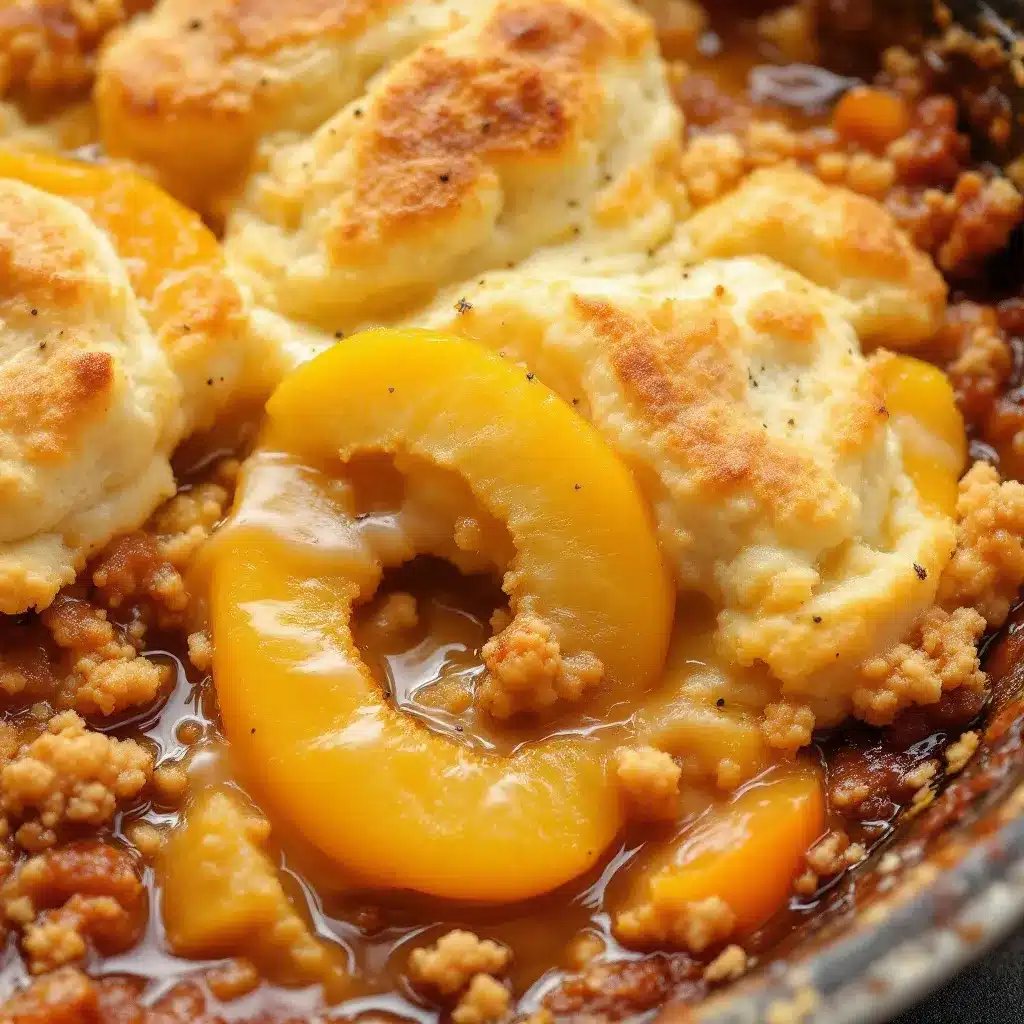
What makes this recipe different is the technique. Most cobblers use a cake-like batter that gets poured over melted butter. That method works, but it often results in a dense, soggy bottom. Here, I’m using a drop biscuit method with cold butter and tangy buttermilk. The biscuits are dropped right onto the hot peach filling, so they steam from the bottom and crisp on top. The result? A cobbler that’s structurally sound, deeply flavorful, and absolutely irresistible.
This isn’t just another peach cobbler recipe—it’s the one you’ll come back to every summer. The one your family will start requesting before peach season even starts. It’s comfort food at its finest, and it’s honestly not that hard to pull off.
What Ingredients You Will Need
This recipe uses simple, honest ingredients to create something truly special. Most of these are pantry staples, but a few key choices make all the difference. Let’s walk through what you’ll need and why each ingredient matters.
For the Peach Filling
- 6 cups fresh or frozen peaches, sliced (about 6-8 medium peaches): If using fresh, look for freestone peaches—they’re easier to slice and the flesh comes away from the pit cleanly. Ripe but still firm peaches hold their shape better during baking. If using frozen, don’t thaw them first; add them straight to the skillet.
- 3/4 cup granulated sugar: This sweetens the filling and helps create that syrupy texture. You can reduce it to 1/2 cup if your peaches are very sweet, but I wouldn’t go lower than that.
- 1/4 cup light brown sugar, packed: Adds a subtle molasses note that deepens the flavor. Don’t skip it—it’s what gives the filling that caramel-like richness.
- 2 tablespoons cornstarch: This thickens the peach juices so the filling isn’t watery. If you’re using very juicy peaches, you might need an extra teaspoon.
- 1 tablespoon fresh lemon juice: Brightens the flavor and balances the sweetness. Bottled lemon juice works in a pinch, but fresh is noticeably better.
- 1/2 teaspoon ground cinnamon: Warm spice that complements the peaches beautifully. I prefer Ceylon cinnamon for its milder, more complex flavor.
- 1/4 teaspoon ground nutmeg: Just a whisper—enough to add depth without overpowering the fruit. Freshly grated is ideal, but pre-ground works fine.
- 1/4 teaspoon salt: Don’t skip this. Salt enhances the sweetness and balances all the flavors.
- 2 tablespoons unsalted butter, cut into small pieces: Dotting butter over the filling before baking adds richness and helps create that glossy, syrupy texture.
For the Buttermilk Biscuit Topping
- 2 cups all-purpose flour: I use White Lily flour when I can find it—it’s a lower-protein Southern flour that makes incredibly tender biscuits. Regular all-purpose works perfectly too.
- 1/4 cup granulated sugar: Adds a touch of sweetness to the biscuits. If you prefer a less sweet topping, reduce to 2 tablespoons.
- 2 teaspoons baking powder: The main leavening agent. Make sure it’s fresh—old baking powder won’t give you tall, fluffy biscuits.
- 1/2 teaspoon baking soda: Works with the buttermilk to create extra lift and helps with browning.
- 1/2 teaspoon salt: Essential for flavor. Use fine sea salt for even distribution.
- 1/2 cup cold unsalted butter, cut into small cubes: This is the most important ingredient for flaky biscuits. The butter must be cold—I pop my cubed butter in the freezer for 10 minutes before starting.
- 3/4 cup cold buttermilk, plus more for brushing: The acidity in buttermilk tenderizes the gluten and reacts with the baking soda for extra lift. If you don’t have buttermilk, you can make a quick substitute by adding 1 tablespoon of lemon juice or vinegar to 3/4 cup of milk and letting it sit for 5 minutes.
- 1 tablespoon coarse sugar (like turbinado or demerara), for sprinkling: This creates a lovely crunchy top. Regular granulated sugar works too, but coarse sugar gives a better texture.
For the best results, I recommend using White Lily flour if you can find it—it’s milled from soft winter wheat and produces biscuits that are almost cloud-like. If you’re in a pinch, King Arthur all-purpose is my second choice. And please, please use real buttermilk, not the powdered stuff. The texture and flavor are noticeably different.
Equipment Needed
You don’t need a fancy kitchen to make this cobbler, but a few key tools will make the process smoother and the results better.
- 10-inch cast iron skillet: This is my go-to for cobblers. It heats evenly, retains heat beautifully, and gives the biscuits a gorgeous golden bottom. If you don’t have cast iron, a 9×13-inch baking dish works perfectly—just note that the baking time might be slightly shorter.
- Large mixing bowls: One for the filling, one for the biscuit dough. I prefer stainless steel or glass—they’re easier to keep cold if you need to chill the dough.
- Pastry cutter or two forks: For cutting the cold butter into the flour. A pastry cutter is my preference—it’s quick and gives you control over the butter piece size. Two forks work in a pinch, but your hands will warm the butter too much.
- Measuring cups and spoons: Accuracy matters in baking. Use dry measuring cups for the flour and sugar, and liquid measuring cups for the buttermilk.
- Chef’s knife and cutting board: For slicing the peaches. A sharp knife makes the job much easier and gives you clean, even slices.
- Spatula or wooden spoon: For stirring the filling and mixing the biscuit dough. A rubber spatula is great for getting every last bit of dough out of the bowl.
- Parchment paper (optional): If you’re using a baking dish instead of cast iron, lining it with parchment makes cleanup a breeze.
I’ve made this cobbler in a disposable aluminum pan at a campsite, and it still turned out great. Don’t stress if you don’t have a cast iron skillet—use what you have. The recipe is forgiving.
Preparation Method
Let’s get cooking. This recipe moves quickly once you start, so I recommend reading through the entire method before you begin. Trust me—it’s worth the few extra minutes.
Step 1: Preheat and Prep
Preheat your oven to 375°F (190°C). Place your cast iron skillet or baking dish in the oven while it preheats—warming the pan helps the filling start bubbling immediately, which gives you that perfect syrupy texture.
Step 2: Make the Peach Filling
In a large bowl, combine the sliced peaches, granulated sugar, brown sugar, cornstarch, lemon juice, cinnamon, nutmeg, and salt. Stir gently until the peaches are evenly coated. Let the mixture sit for about 10 minutes—this gives the peaches time to release their juices, which will create that luscious syrup. You’ll see the liquid start to pool at the bottom of the bowl. That’s exactly what we want.
Step 3: Prepare the Biscuit Dough
In a separate large bowl, whisk together the flour, 1/4 cup granulated sugar, baking powder, baking soda, and salt. Add the cold butter cubes to the flour mixture. Using a pastry cutter or two forks, cut the butter into the flour until the mixture resembles coarse meal with some pea-sized butter pieces remaining. You want visible flecks of butter—those create steam pockets in the oven, which give you flaky, tender biscuits.
Make a well in the center of the flour mixture and pour in the cold buttermilk. Stir with a spatula or wooden spoon just until the dough comes together. It will be shaggy and a bit sticky—that’s perfect. Don’t overmix, or your biscuits will be tough. If the dough seems too dry, add another tablespoon of buttermilk. If it’s too wet, add a tablespoon of flour.
Step 4: Assemble the Cobbler
Carefully remove the hot skillet from the oven. Pour the peach mixture into the hot skillet—it should sizzle immediately. Dot the top of the peaches with the 2 tablespoons of butter pieces. This step adds richness and helps create that glossy, syrupy texture.
Using a large spoon or cookie scoop, drop spoonfuls of the biscuit dough over the peach filling. Don’t worry about making them perfect—irregular shapes are part of the charm. Aim for about 8 to 10 biscuits, spaced evenly but touching slightly. They’ll spread a bit as they bake, so leave a little room for expansion.
Brush the tops of the biscuits with a little buttermilk and sprinkle generously with coarse sugar. This gives the biscuits that beautiful golden crust and a subtle crunch.
Step 5: Bake
Place the skillet in the preheated oven and bake for 35 to 40 minutes, or until the filling is bubbling thickly around the edges and the biscuits are deep golden brown on top. If the biscuits are browning too quickly, tent the skillet loosely with foil for the last 10 minutes. The filling should be thick and jammy, not watery—if it’s still runny, give it another 5 minutes.
Step 6: Cool and Serve
Let the cobbler cool on a wire rack for at least 15 minutes before serving. This resting time allows the filling to set up so it doesn’t run all over your plate. I know it’s tempting to dig in immediately, but patience pays off here. Serve warm, preferably with a generous scoop of vanilla ice cream or a dollop of lightly sweetened whipped cream. The contrast between the warm, jammy peaches and the cold, creamy ice cream is nothing short of magical.
Pro tip: If you’re serving this at a gathering, make it a few hours ahead and reheat it in a 300°F oven for 10 minutes before serving. The flavors meld together even more as it sits, and the biscuits stay perfectly tender.
Cooking Tips & Techniques
I’ve made this cobbler probably twenty times now, and I’ve learned a few things the hard way. Here are my best tips to ensure your cobbler turns out perfect every single time.
Don’t peel the peaches. I know some recipes call for it, but the skins add color, texture, and a slight tartness that balances the sweetness. They soften during baking and become practically unnoticeable. Plus, it saves you a ton of time. If you’re really bothered by the skins, go ahead and peel them—but I promise you won’t notice.
Keep your butter and buttermilk cold. This is non-negotiable for fluffy biscuits. If the butter warms up before it hits the oven, it’ll melt into the flour instead of creating steam pockets. I pop my cubed butter in the freezer for 10 minutes before cutting it into the flour. For the buttermilk, I keep it in the fridge until the very last second.
Don’t overmix the biscuit dough. Stir just until the flour is moistened. A few dry spots are fine—they’ll hydrate as the biscuits bake. Overmixing develops gluten, which makes biscuits tough and dense. You want them tender and flaky, not chewy.
Use a hot skillet. Preheating the skillet in the oven ensures the filling starts bubbling immediately, which helps thicken the syrup and gives the biscuits a head start on cooking. If you pour the filling into a cold pan, the cooking time will be longer and the texture might be off.
Let it rest. I cannot stress this enough. If you serve the cobbler straight out of the oven, the filling will be runny and the biscuits might fall apart. Give it at least 15 minutes (30 is even better) to set up. The juices will thicken as they cool, and the biscuits will absorb just enough of that syrupy goodness without getting soggy.
One mistake I made early on was using too much cornstarch. I thought more thickener would give me a better texture, but it actually made the filling gummy and weird. Stick with the 2 tablespoons—it’s the sweet spot. If your peaches are exceptionally juicy, you can add an extra teaspoon, but no more than that.
Another thing I learned? Don’t overcrowd the biscuits. I tried to fit more biscuits on top once, thinking I’d get more topping, but they just merged into one big, doughy mess. Eight to ten biscuits is the perfect amount—they should touch slightly but still have distinct edges.
Variations & Adaptations
This recipe is wonderfully adaptable. Here are a few ways to make it your own.
Gluten-Free Version: Substitute the all-purpose flour with a 1:1 gluten-free baking blend that contains xanthan gum. I’ve had good results with King Arthur Measure for Measure. The biscuits will be slightly more tender and less flaky, but still delicious. Add an extra tablespoon of buttermilk if the dough seems dry.
Vegan Adaptation: Use cold vegan butter (I recommend Miyoko’s or Earth Balance) and replace the buttermilk with 3/4 cup unsweetened oat or almond milk mixed with 1 tablespoon of apple cider vinegar. The biscuits won’t be quite as fluffy, but they’ll still be tasty. Brush the tops with a little non-dairy milk before sprinkling with sugar.
Spiced Peach Cobbler: Add 1/4 teaspoon of cardamom and a pinch of cloves to the filling along with the cinnamon and nutmeg. The warm, floral notes of cardamom pair beautifully with peaches. If you’re feeling adventurous, add a split vanilla bean to the filling while it sits—remove it before baking.
Berry Peach Cobbler: Swap half the peaches for fresh or frozen blueberries, raspberries, or blackberries. The combination of sweet peaches and tart berries is absolutely lovely. If using frozen berries, add them straight to the filling without thawing. You might need an extra teaspoon of cornstarch to account for the extra liquid.
Savory-Sweet Twist: Add a teaspoon of fresh thyme or rosemary leaves to the peach filling. The herbaceous notes cut through the sweetness and add an unexpected layer of flavor. I tried this on a whim last summer and it was a hit at a dinner party. Serve with a dollop of crème fraîche instead of ice cream.
If you love peach desserts as much as I do, you might also enjoy my easy skillet peach crisp with oat streusel or this fresh peach upside-down cake with bourbon caramel. Both are perfect for using up a bounty of summer peaches.
Serving & Storage Suggestions
This cobbler is at its absolute best served warm, about 15 to 30 minutes after it comes out of the oven. The filling should be thick and jammy, the biscuits tender and golden. A scoop of high-quality vanilla ice cream is the classic pairing—the cold creaminess against the warm, spiced peaches is pure magic. If you’re not in the mood for ice cream, try a dollop of lightly sweetened whipped cream or a drizzle of heavy cream. For a truly Southern experience, serve it with a glass of sweet tea.
This cobbler also pairs beautifully with other summer dishes. For a casual get-together, serve it alongside grilled peach burrata salad with prosciutto and honey for a full peach-themed menu. Or, keep it simple and let the cobbler shine on its own.
Storage: Leftover cobbler keeps well in the refrigerator for up to 4 days. Cover the skillet or dish tightly with foil or plastic wrap. The biscuits will soften slightly as they sit, but the flavor actually improves—the peaches and spices meld together beautifully overnight.
Reheating: The best way to reheat cobbler is in the oven. Place it in a 300°F oven for 10 to 15 minutes, until warmed through. This restores some of the biscuit’s crispness. You can also reheat individual portions in the microwave for about 30 seconds, but the biscuits will be softer. If you’re in a hurry, the microwave works—just don’t expect the same texture.
Freezing: You can freeze the assembled but unbaked cobbler. Prepare the recipe up to the point of adding the biscuit topping, then cover tightly with foil and freeze for up to 3 months. To bake, add about 15 minutes to the baking time (no need to thaw). Alternatively, you can freeze the baked cobbler for up to 2 months. Thaw overnight in the refrigerator and reheat in a 300°F oven until warmed through.
Nutritional Information & Benefits
Here’s the honest truth: this is a dessert, and it’s meant to be enjoyed. But there are a few nutritional bright spots worth noting.
Peaches are a good source of vitamin C, vitamin A, and dietary fiber. They also contain antioxidants like chlorogenic acid, which may help reduce inflammation and support heart health. The buttermilk in the biscuits provides calcium and probiotics (if you’re using real cultured buttermilk).
For a lighter version, you can reduce the sugar in the filling to 1/2 cup and use a sugar substitute like monk fruit in the biscuits. You can also swap the butter for a plant-based alternative to reduce saturated fat. But honestly? This is one of those recipes where I say go all in. Life’s too short for sad cobbler.
Estimated nutritional information per serving (1/8 of recipe):
| Nutrient | Amount |
|---|---|
| Calories | 385 |
| Total Fat | 16g |
| Saturated Fat | 10g |
| Cholesterol | 42mg |
| Sodium | 340mg |
| Total Carbohydrates | 58g |
| Dietary Fiber | 3g |
| Sugars | 38g |
| Protein | 5g |
Dietary considerations: This recipe contains gluten, dairy, and eggs (in the buttermilk). For a gluten-free version, see the variations section above. For a vegan version, use plant-based butter and a buttermilk substitute. This recipe is not suitable for low-carb or keto diets.
Conclusion
This classic Southern peach cobbler is the kind of recipe that becomes a tradition. It’s simple enough for a Tuesday night but special enough for a holiday gathering. The combination of sweet, jammy peaches and tender, tangy buttermilk biscuits is timeless—and honestly, it’s hard to beat.
I hope you’ll try this recipe and make it your own. Maybe you’ll add a little extra cinnamon, or swap the peaches for nectarines, or serve it with a scoop of bourbon vanilla ice cream. Whatever you do, don’t forget to share it with someone you love. That’s what this cobbler is really about—bringing people together around a warm, delicious dessert.
If you make this recipe, I’d love to hear about it. Leave a comment below and let me know how it turned out. Did you add any twists? Serve it with something unexpected? I read every single comment, and your feedback helps me create better recipes for you.
Happy baking, friends. And remember—always save room for cobbler.
Frequently Asked Questions
Can I use frozen peaches instead of fresh?
Absolutely. Frozen peaches work beautifully in this recipe. Use them straight from the freezer without thawing—this prevents them from becoming mushy. You might need to add an extra teaspoon of cornstarch to account for the extra liquid they release during baking.
Why are my biscuits dense and not fluffy?
The most common culprit is overmixing the dough. Stir just until the flour is moistened—a few dry spots are fine. Another issue could be warm butter or buttermilk. Make sure both are very cold before you start. If your kitchen is warm, pop the mixing bowl in the fridge for 10 minutes before dropping the biscuits onto the filling.
Can I make this cobbler ahead of time?
Yes! You can assemble the cobbler (without baking) up to 24 hours in advance. Cover and refrigerate, then add about 10 minutes to the baking time. You can also bake it a day ahead and reheat in a 300°F oven for 15 minutes before serving. The flavors actually improve as it sits.
Can I use a different fruit instead of peaches?
Definitely. Nectarines, apricots, plums, or a mix of berries all work well. If using a fruit that’s less sweet than peaches, you may want to increase the sugar by 1 to 2 tablespoons. For very tart fruits like rhubarb, add an extra 1/4 cup of sugar.
How do I prevent the cobbler from being too runny?
Two things: make sure you’re using enough cornstarch (2 tablespoons is the sweet spot), and let the cobbler rest for at least 15 minutes after baking. The filling thickens as it cools. If your peaches are exceptionally juicy, you can add an extra teaspoon of cornstarch. Also, don’t skip the lemon juice—the acid helps the cornstarch do its job.
Pin This Recipe!
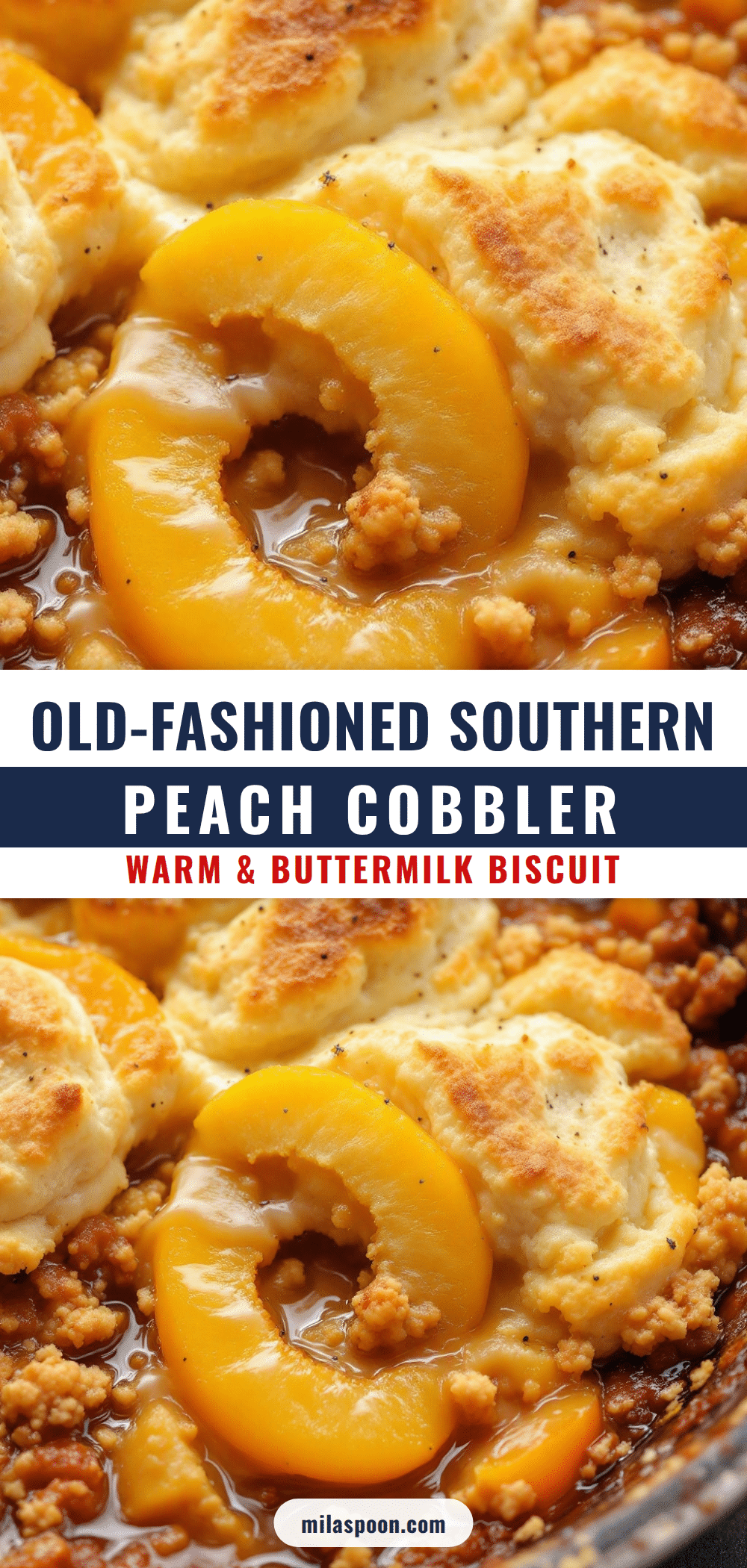
Classic Southern Peach Cobbler with Fluffy Biscuits
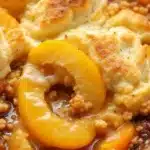
This classic Southern peach cobbler features sweet, jammy peaches and tender, tangy buttermilk biscuits. It’s simple enough for a weeknight but special enough for a holiday gathering, and it’s sure to become a tradition.
- Prep Time: 15 minutes
- Cook Time: 35-40 minutes
- Total Time: 50-55 minutes
- Yield: 8 servings 1x
- Category: Dessert
- Cuisine: Southern
Ingredients
- 6 cups fresh or frozen peaches, sliced (about 6–8 medium peaches)
- 3/4 cup granulated sugar
- 1/4 cup light brown sugar, packed
- 2 tablespoons cornstarch
- 1 tablespoon fresh lemon juice
- 1/2 teaspoon ground cinnamon
- 1/4 teaspoon ground nutmeg
- 1/4 teaspoon salt
- 2 tablespoons unsalted butter, cut into small pieces
- 2 cups all-purpose flour
- 1/4 cup granulated sugar
- 2 teaspoons baking powder
- 1/2 teaspoon baking soda
- 1/2 teaspoon salt
- 1/2 cup cold unsalted butter, cut into small cubes
- 3/4 cup cold buttermilk, plus more for brushing
- 1 tablespoon coarse sugar (like turbinado or demerara), for sprinkling
Instructions
- Preheat your oven to 375°F (190°C). Place your cast iron skillet or baking dish in the oven while it preheats.
- In a large bowl, combine the sliced peaches, granulated sugar, brown sugar, cornstarch, lemon juice, cinnamon, nutmeg, and salt. Stir gently until the peaches are evenly coated. Let the mixture sit for about 10 minutes.
- In a separate large bowl, whisk together the flour, 1/4 cup granulated sugar, baking powder, baking soda, and salt. Add the cold butter cubes to the flour mixture. Using a pastry cutter or two forks, cut the butter into the flour until the mixture resembles coarse meal with some pea-sized butter pieces remaining.
- Make a well in the center of the flour mixture and pour in the cold buttermilk. Stir with a spatula or wooden spoon just until the dough comes together. It will be shaggy and a bit sticky.
- Carefully remove the hot skillet from the oven. Pour the peach mixture into the hot skillet. Dot the top of the peaches with the 2 tablespoons of butter pieces.
- Using a large spoon or cookie scoop, drop spoonfuls of the biscuit dough over the peach filling. Aim for about 8 to 10 biscuits, spaced evenly but touching slightly.
- Brush the tops of the biscuits with a little buttermilk and sprinkle generously with coarse sugar.
- Place the skillet in the preheated oven and bake for 35 to 40 minutes, or until the filling is bubbling thickly around the edges and the biscuits are deep golden brown on top.
- Let the cobbler cool on a wire rack for at least 15 minutes before serving. Serve warm, preferably with vanilla ice cream or whipped cream.
Notes
Don’t peel the peaches; the skins add color and texture. Keep butter and buttermilk cold for fluffy biscuits. Don’t overmix the biscuit dough. Let the cobbler rest for at least 15 minutes after baking to allow the filling to set. For a gluten-free version, use a 1:1 gluten-free baking blend. For a vegan version, use cold vegan butter and a buttermilk substitute.
Nutrition
- Serving Size: 1/8 of recipe
- Calories: 385
- Sugar: 38
- Sodium: 340
- Fat: 16
- Saturated Fat: 10
- Carbohydrates: 58
- Fiber: 3
- Protein: 5
Keywords: peach cobbler, Southern dessert, buttermilk biscuits, summer dessert, cast iron skillet, peach recipe