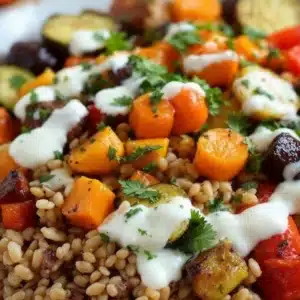
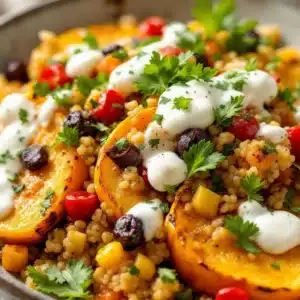
Love this? Save it for later!
Share the inspiration with your friends
My husband took one bite of this fall harvest grain bowl, stopped chewing, and just looked at me. Not in a dramatic way—more like he was processing something. He swallowed and said, “This is the best thing you’ve made in weeks.” Which, honestly, could have gone either way depending on what I’d been serving lately. But he ate the leftovers cold from the fridge the next morning standing over the sink, and that’s when I knew this one was sticking around.
I didn’t set out to create a perfect cozy fall bowl. I had a butternut squash that needed using, some leftover farro from another recipe attempt, and a fridge full of random vegetables. It was one of those afternoons where you just start chopping and roasting without a real plan. The kitchen smelled like sage and garlic and something sweet caramelizing in the oven. By the time I pulled the tray out, I knew I was onto something.
This easy fall harvest grain bowl is the kind of meal that feels both rustic and intentional. It’s forgiving enough for a Tuesday night but impressive enough to serve when you want to pretend you planned ahead. The roasted vegetables get those perfect caramelized edges, the farro stays chewy and nutty, and the whole thing comes together with a simple maple-tahini dressing that ties everything together without overpowering it. It’s the kind of bowl that makes you feel like you’re eating something good for you without feeling like you’re punishing yourself.
I’ve made this recipe at least a dozen times since that first accidental version. Each time I tweak something—different vegetables, a new grain, a different herb. And every time, it works. That’s the kind of recipe worth holding onto.
Why You’ll Love This Recipe
Let’s be real—grain bowls can be boring. Dry quinoa, sad roasted vegetables, dressing that tastes like watered-down vinegar. This is not that bowl. After testing this recipe through multiple iterations (and a few failures I’ll own up to later), here’s why this version actually delivers:
- Quick & Easy: From start to table in about 45 minutes, most of which is hands-off roasting time. Perfect for those evenings when you want something substantial but don’t want to spend an hour at the stove.
- Simple Ingredients: Everything on the ingredient list is something you can find at any grocery store. No specialty items, no obscure grains that require a separate shopping trip.
- Perfect for Meal Prep: This bowl actually gets better as the flavors meld together. Make a big batch on Sunday and eat well all week.
- Crowd-Pleaser: I’ve served this to vegetable skeptics and dedicated carnivores alike. The roasted sweet potatoes and the creamy dressing have converted more than a few “I don’t eat bowls” people.
- Unbelievably Satisfying: The combination of chewy farro, caramelized vegetables, crunchy pepitas, and that tangy-sweet dressing hits every texture and flavor note. You won’t be reaching for a snack an hour later.
What makes this recipe different from the other grain bowls out there? It’s the balance. Most recipes go heavy on one element and forget the rest. This one gives equal attention to the grain, the vegetables, the crunch factor, and the dressing. Every bite has something interesting happening. Plus, the maple-tahini dressing is honestly good enough to drink—I’ve caught myself licking the spoon more times than I care to admit.
This isn’t just another healthy bowl recipe. It’s the kind of meal that makes you look forward to eating your vegetables. The kind that feels like a warm hug on a chilly fall evening. And honestly? It’s the kind of recipe that makes you feel like you’ve got your life together, even if the rest of your day was chaos.
What Ingredients You Will Need
This recipe uses simple, wholesome ingredients that come together to create something genuinely greater than the sum of their parts. Most of these are pantry staples or easy fall produce finds. Here’s what you’ll need and why each one matters:
For the Roasted Vegetables
- 1 medium butternut squash, peeled and cubed (about 3 cups) — Look for one that feels heavy for its size. The sweetness intensifies as it roasts, giving you those caramelized edges that make this bowl special.
- 2 medium sweet potatoes, cubed (about 2 cups) — I prefer orange-fleshed sweet potatoes here. They get softer and sweeter than the white-fleshed variety.
- 1 red onion, cut into wedges — The onion gets sweet and jammy as it roasts. Don’t skip it—it adds a subtle savory depth that balances the sweetness of the squash and sweet potatoes.
- 3 tablespoons olive oil — A good quality extra virgin olive oil makes a difference here. You want something that can handle high heat without burning.
- 1 teaspoon dried sage — Sage and fall vegetables are a classic pairing for good reason. If you have fresh sage, use about 1 tablespoon chopped.
- 1 teaspoon smoked paprika — This adds a subtle warmth that complements the sweetness of the vegetables without overwhelming them.
- ½ teaspoon garlic powder — Optional but recommended. It adds a savory backbone to the roasted vegetables.
- Salt and black pepper to taste
For the Grain Base
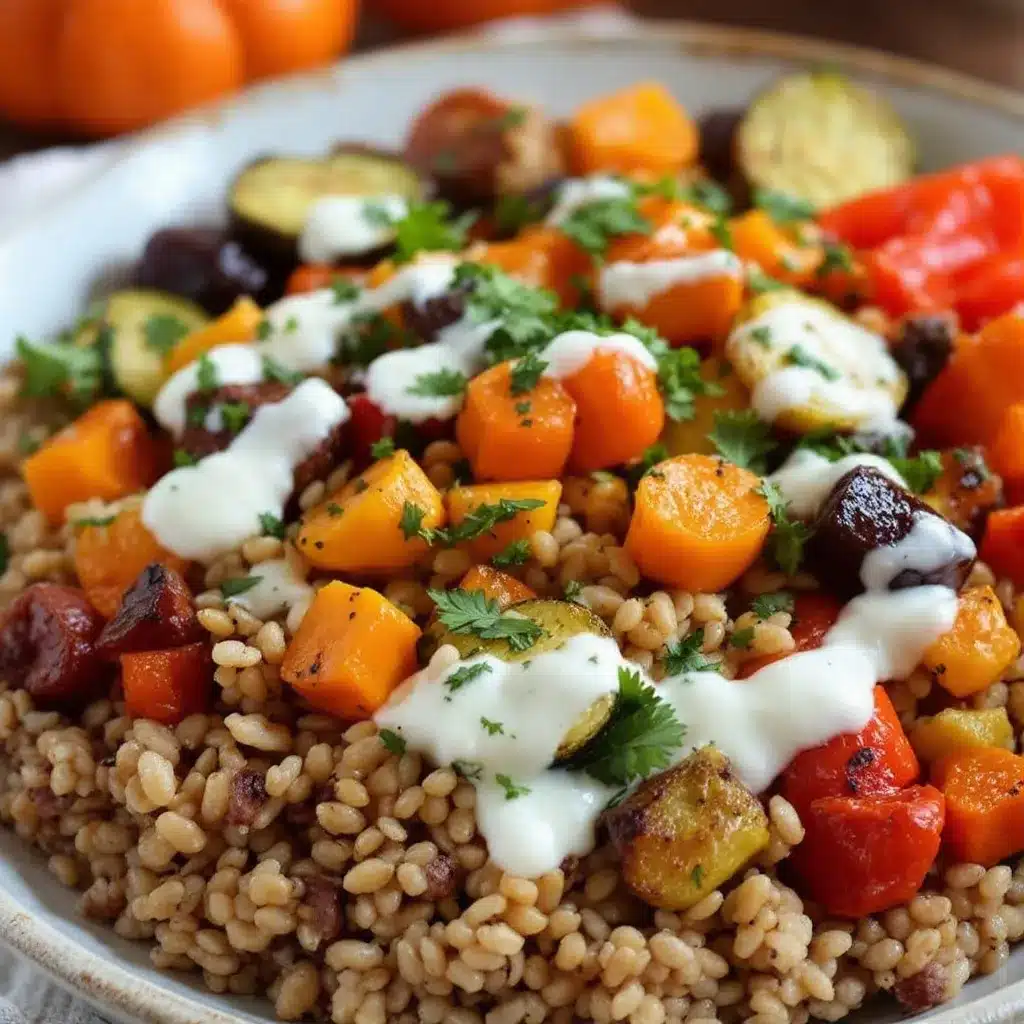
- 1 cup farro — I recommend pearled farro for a shorter cooking time. It has a wonderful chewy texture that holds up well against the roasted vegetables. If you can only find whole farro, just allow extra cooking time.
- 2 cups vegetable broth or water — Cooking the farro in broth adds flavor, but water works perfectly fine too.
- Pinch of salt
For the Maple-Tahini Dressing
- ¼ cup tahini — Stir your tahini well before measuring. The oil separates naturally, and you want a smooth, consistent texture. I prefer Soom or Seed + Mill brands for their creaminess.
- 2 tablespoons maple syrup — Real maple syrup, not pancake syrup. The grade doesn’t matter much here—use whatever you have.
- 2 tablespoons lemon juice — Fresh is best, but bottled works in a pinch.
- 2-3 tablespoons warm water — Add gradually until the dressing reaches a pourable consistency.
- 1 small garlic clove, minced — A microplane works great here for getting the garlic fine enough to blend seamlessly.
- ¼ teaspoon salt
For the Toppings
- ¼ cup pepitas (pumpkin seeds) — Toast them in a dry pan for 2-3 minutes until they start to pop. It takes seconds and makes a huge difference in flavor.
- ¼ cup dried cranberries — The tartness cuts through the richness of the dressing and the sweetness of the roasted vegetables.
- 2 tablespoons fresh parsley, chopped — Adds a fresh, bright finish. Flat-leaf parsley works best here.
- Optional: crumbled feta or goat cheese — If you’re not dairy-free, a sprinkle of salty cheese takes this bowl to another level. I use about ¼ cup.
Equipment Needed
You don’t need a lot of fancy equipment for this recipe, which is part of what makes it so approachable. Here’s what you’ll actually use:
- Large baking sheet — A half-sheet pan (18×13 inches) is ideal. If your baking sheet is smaller, use two pans or roast in batches. Crowding the pan leads to steaming instead of caramelization, and we want those golden-brown edges.
- Medium saucepan — For cooking the farro. Any 2-3 quart pot will do.
- Chef’s knife and cutting board — A sharp knife makes cubing squash and sweet potatoes much less frustrating. Trust me on this one.
- Small bowl or jar — For whisking together the dressing. A mason jar works great—just shake it up.
- Vegetable peeler — For peeling the butternut squash. A Y-peeler is my preference, but any sharp peeler will work.
- Mixing bowls — For tossing the vegetables with oil and spices before roasting.
If you don’t have a half-sheet pan, don’t worry. I’ve used a 9×13 baking dish in a pinch, and it worked fine—just expect slightly less caramelization and a longer roasting time. The vegetables will still taste great, they just won’t have those same crispy edges.
Preparation Method
Let me walk you through this step by step. I’ve made this bowl enough times to know where things can go sideways, so I’ll point out the tricky spots as we go.
- Preheat your oven to 425°F (220°C). Line a large baking sheet with parchment paper if you have it. The parchment makes cleanup easier and helps prevent the vegetables from sticking. If you don’t have parchment, a light spray of oil on the pan works too.
- Cook the farro. Rinse 1 cup of farro under cold water. In a medium saucepan, combine the farro with 2 cups of vegetable broth or water and a pinch of salt. Bring to a boil over high heat, then reduce to a simmer, cover, and cook for 25-30 minutes (if using pearled farro) or 40-45 minutes (if using whole farro). The farro is done when it’s tender but still has a pleasant chew—think al dente pasta. Drain any excess liquid and fluff with a fork. Set aside.
- Prep the vegetables. While the farro cooks, peel and cube your butternut squash. Here’s a tip I learned the hard way: cut the squash in half where the narrow neck meets the bulbous bottom. This gives you two flat, stable surfaces to work with. Peel each section with a vegetable peeler, then cut into roughly ¾-inch cubes. Do the same with the sweet potatoes. Cut the red onion into 8 wedges through the root end so they hold together during roasting.
- Season and roast. In a large bowl, toss the cubed squash, sweet potatoes, and onion wedges with 3 tablespoons olive oil, 1 teaspoon dried sage, 1 teaspoon smoked paprika, ½ teaspoon garlic powder, and a generous pinch of salt and pepper. Spread everything in a single layer on your prepared baking sheet. Don’t overcrowd—if the vegetables are piled on top of each other, they’ll steam instead of roast. Roast for 25-30 minutes, flipping halfway through, until the vegetables are tender and caramelized at the edges. The squash should be easily pierced with a fork but not mushy.
- Make the dressing. While the vegetables roast, combine ¼ cup tahini, 2 tablespoons maple syrup, 2 tablespoons lemon juice, 1 minced garlic clove, and ¼ teaspoon salt in a small bowl. Whisk until smooth. Add warm water 1 tablespoon at a time, whisking after each addition, until the dressing reaches a pourable consistency. It should be thick enough to coat the back of a spoon but thin enough to drizzle. Taste and adjust—more lemon if you want it tangier, more maple if you want it sweeter. Set aside.
- Toast the pepitas. In a small dry skillet over medium heat, toast ¼ cup pepitas for 2-3 minutes, shaking the pan frequently. You’ll know they’re done when they start to pop and smell nutty. Remove from the heat immediately to prevent burning. Set aside.
- Assemble the bowls. Divide the cooked farro among serving bowls. Top with the roasted vegetables. Drizzle generously with the maple-tahini dressing. Sprinkle with toasted pepitas, dried cranberries, fresh parsley, and crumbled cheese if using. Serve warm or at room temperature.
A few things I’ve learned through trial and error: don’t skip the step of flipping the vegetables halfway through roasting. The bottom side gets all the heat, and flipping ensures even caramelization. Also, let the farro cool slightly before adding the dressing. If it’s too hot, the dressing can thin out and slide right off. And here’s a pro tip—if you’re meal prepping, store the dressing separately and add it just before serving. Nobody wants soggy grain bowls.
Cooking Tips & Techniques
I’ve made this bowl enough times to collect a few hard-won lessons. Here are the ones that actually matter:
Get your oven hot enough. 425°F isn’t a suggestion—it’s the temperature that gives you caramelized vegetables instead of steamed ones. If your oven runs cool, bump it up to 450°F. The vegetables should sizzle when they hit the pan. If they don’t, your oven wasn’t hot enough.
Cut your vegetables evenly. I know this sounds basic, but it’s the difference between perfectly roasted vegetables and a mix of burnt edges and raw centers. Aim for ¾-inch cubes on the squash and sweet potatoes. The onion wedges can be a bit larger—they’ll soften and sweeten as they roast.
Don’t skip the parchment. I’ve tried roasting directly on the pan, and the cleanup is miserable. The sugars in the squash and sweet potatoes caramelize and stick to everything. Parchment paper saves you 10 minutes of scrubbing and saves the vegetables from tearing when you try to flip them.
Season in layers. Salt the vegetables before roasting, season the farro cooking liquid, and season the dressing separately. Each layer of seasoning builds flavor. If you only salt the vegetables, the farro and dressing will taste flat.
Toast your pepitas. This takes two minutes and transforms them from bland seeds into nutty, crunchy flavor bombs. I once forgot to toast them and the bowl felt incomplete. It’s a small step that makes a big difference.
Let the farro rest. After draining, let the farro sit in the colander for a few minutes to steam off excess moisture. Wet farro makes the dressing slide right off. You want the grains to be tender but dry enough to hold onto the dressing.
One mistake I made early on: I tried to rush the process by cooking the farro in the same pan I’d use for the dressing. Don’t do this. The residual heat from the farro will thin out the tahini dressing and make it runny. Keep the dressing at room temperature until you’re ready to serve.
Variations & Adaptations
This recipe is forgiving enough to adapt to whatever you have on hand. Here are some variations I’ve tried and loved:
Grain Swap: If you don’t have farro, use quinoa, brown rice, or barley. Each grain brings a different texture. Quinoa cooks faster and is lighter, while barley has a similar chew to farro. Adjust cooking times according to the grain you choose. For a lower-carb option, try cauliflower rice—just sauté it in a pan with a little olive oil for 5-7 minutes.
Vegetable Variations: This recipe works well with almost any fall vegetable. Try roasted Brussels sprouts (halved), carrots (cut into chunks), or cubed acorn squash. In the spring, swap in asparagus and peas. In summer, use zucchini and bell peppers. The roasting time may vary depending on the vegetable, so keep an eye on things and adjust as needed.
Protein Additions: For a heartier meal, add grilled chicken, roasted chickpeas, or crumbled tofu. I sometimes add a soft-boiled egg on top for extra richness. The egg yolk mixing into the dressing is honestly one of my favorite variations.
Dressing Alternatives: If you’re out of tahini, try a simple vinaigrette with olive oil, apple cider vinegar, and a touch of maple syrup. Or go with a creamy lemon-herb dressing made with Greek yogurt. The maple-tahini is my favorite, but the bowl works with almost any dressing you like.
Dairy-Free Option: Skip the feta or goat cheese entirely, or use a dairy-free alternative. The bowl is still delicious without it—the dressing provides plenty of creaminess.
Spice It Up: Add a pinch of cayenne pepper or red pepper flakes to the roasted vegetables for a subtle heat. The sweetness of the maple in the dressing balances the spice beautifully.
I once made this bowl with leftover roasted vegetables from a cozy roasted tomato basil soup dinner, and it was honestly one of the best versions I’ve made. The roasted tomatoes added a depth of flavor I hadn’t expected. Don’t be afraid to experiment with whatever vegetables you have.
Serving & Storage Suggestions
This bowl is best served warm or at room temperature. The contrast between the warm roasted vegetables and the cool, creamy dressing is part of what makes it so satisfying. If you’re serving it for company, assemble the bowls just before serving so everything stays fresh.
For a beautiful presentation, arrange the components in sections rather than mixing everything together. Start with a bed of farro, arrange the roasted vegetables on top, drizzle with dressing, and finish with the toppings. It looks intentional and inviting.
This bowl pairs beautifully with a simple side salad or a cup of soup. If you’re serving it as a main dish, it’s hearty enough to stand on its own. For a larger meal, add a side of crusty bread or a simple green salad with a lemon vinaigrette.
Storage: Store the components separately in airtight containers in the refrigerator for up to 4 days. The farro and roasted vegetables can be stored together, but keep the dressing, pepitas, and fresh herbs separate. The roasted vegetables will soften slightly over time, but they’ll still be delicious.
Reheating: The best way to reheat this bowl is in a skillet over medium heat with a splash of water or broth. This revives the farro and warms the vegetables without making them soggy. You can also microwave it, but the texture won’t be as good. If microwaving, heat in 30-second intervals and stir between each.
Freezing: I don’t recommend freezing the assembled bowl. The farro and vegetables will become mushy when thawed. However, you can freeze the roasted vegetables on their own for up to 3 months. Thaw in the refrigerator overnight and reheat in a skillet before serving with fresh farro and dressing.
One thing I love about this recipe is that the flavors actually improve after a day in the fridge. The farro absorbs the flavors of the roasted vegetables, and everything melds together beautifully. If you’re meal prepping, make the components on Sunday and assemble fresh bowls throughout the week.
Nutritional Information & Benefits
This bowl is as nutritious as it is delicious. Here’s a rough estimate per serving (based on 4 servings, without optional cheese):
| Nutrient | Amount per Serving |
|---|---|
| Calories | ~450 |
| Protein | 12g |
| Carbohydrates | 65g |
| Fiber | 12g |
| Fat | 18g |
| Saturated Fat | 2.5g |
| Sugar | 18g (naturally occurring) |
| Sodium | 450mg |
The health benefits here are real. Farro is an ancient grain packed with fiber, protein, and magnesium. Butternut squash and sweet potatoes are loaded with vitamin A (in the form of beta-carotene) and vitamin C. The tahini in the dressing provides healthy fats and calcium. And the pepitas add zinc and iron—great for immune support during cold and flu season.
This recipe is naturally gluten-free if you use certified gluten-free farro or swap in quinoa. It’s also dairy-free (without the cheese) and can be made vegan by using maple syrup instead of honey in any substitutions. The main allergens to note are sesame (from the tahini) and gluten (from the farro).
What I love most about this bowl from a wellness perspective is that it keeps me full and satisfied for hours. The combination of complex carbohydrates, fiber, healthy fats, and protein stabilizes blood sugar and prevents those mid-afternoon energy crashes. It’s the kind of meal that makes you feel good from the inside out.
Conclusion
This cozy fall harvest grain bowl has become my go-to for those in-between days when I want something that feels special but doesn’t require a trip to three different grocery stores. It’s the recipe I turn to when I need to use up vegetables before they go bad, when I want a meal that will keep me full through a long afternoon, or when I just want to eat something that tastes like fall in a bowl.
The best part? You can make it your own. Swap in whatever vegetables you have, use whatever grain is in your pantry, adjust the dressing to your taste. The formula is forgiving enough to accommodate whatever you throw at it, but the core combination of roasted vegetables, chewy farro, and that maple-tahini dressing is worth keeping exactly as written at least once.
I’d love to hear how this recipe turns out for you. Did you add something unexpected? Change up the vegetables? Find a new favorite dressing combination? Drop a comment below and let me know—I read every single one and I’m always looking for new ideas to try. And if you’re looking for more cozy fall recipes, don’t miss these moist pumpkin cream cheese swirl muffins with crunchy pecan topping or this perfect apple cider glazed bundt cake with cardamom crumb topping for dessert.
Happy cooking, and here’s to bowls that feel like a warm hug on a chilly day.
Frequently Asked Questions
Can I make this grain bowl ahead of time for meal prep?
Absolutely. Cook the farro and roast the vegetables up to 4 days in advance. Store them together in an airtight container in the refrigerator. Keep the dressing, pepitas, and fresh herbs separate. When you’re ready to eat, reheat the farro and vegetables in a skillet with a splash of water, then assemble with the fresh toppings and dressing.
What can I use instead of farro?
Quinoa, brown rice, barley, or freekeh all work well. Quinoa cooks faster (about 15 minutes) and has a lighter texture. Barley has a similar chewy texture to farro. Adjust cooking times and liquid ratios according to the grain you choose. For a low-carb option, try cauliflower rice.
Can I use frozen vegetables instead of fresh?
You can, but the texture won’t be as good. Frozen vegetables release more moisture as they roast, which prevents them from getting those caramelized edges. If you’re using frozen, thaw and pat them dry before roasting, and expect a softer texture. The flavor will still be good, just different.
How do I prevent the tahini dressing from being too bitter?
Bitterness in tahini dressing usually comes from the tahini itself. Look for tahini made from hulled sesame seeds, which has a milder flavor. Stir the tahini well before measuring, and balance the bitterness with enough maple syrup and lemon juice. If your dressing is still bitter, add another teaspoon of maple syrup and a squeeze of lemon.
Can I add protein to make this a complete meal?
Definitely. Grilled chicken, roasted chickpeas, crumbled tofu, or a soft-boiled egg all work beautifully. I often add a handful of roasted chickpeas for extra crunch and protein. The bowl is already quite filling on its own, but adding protein makes it a more substantial meal for active days.
Pin This Recipe!
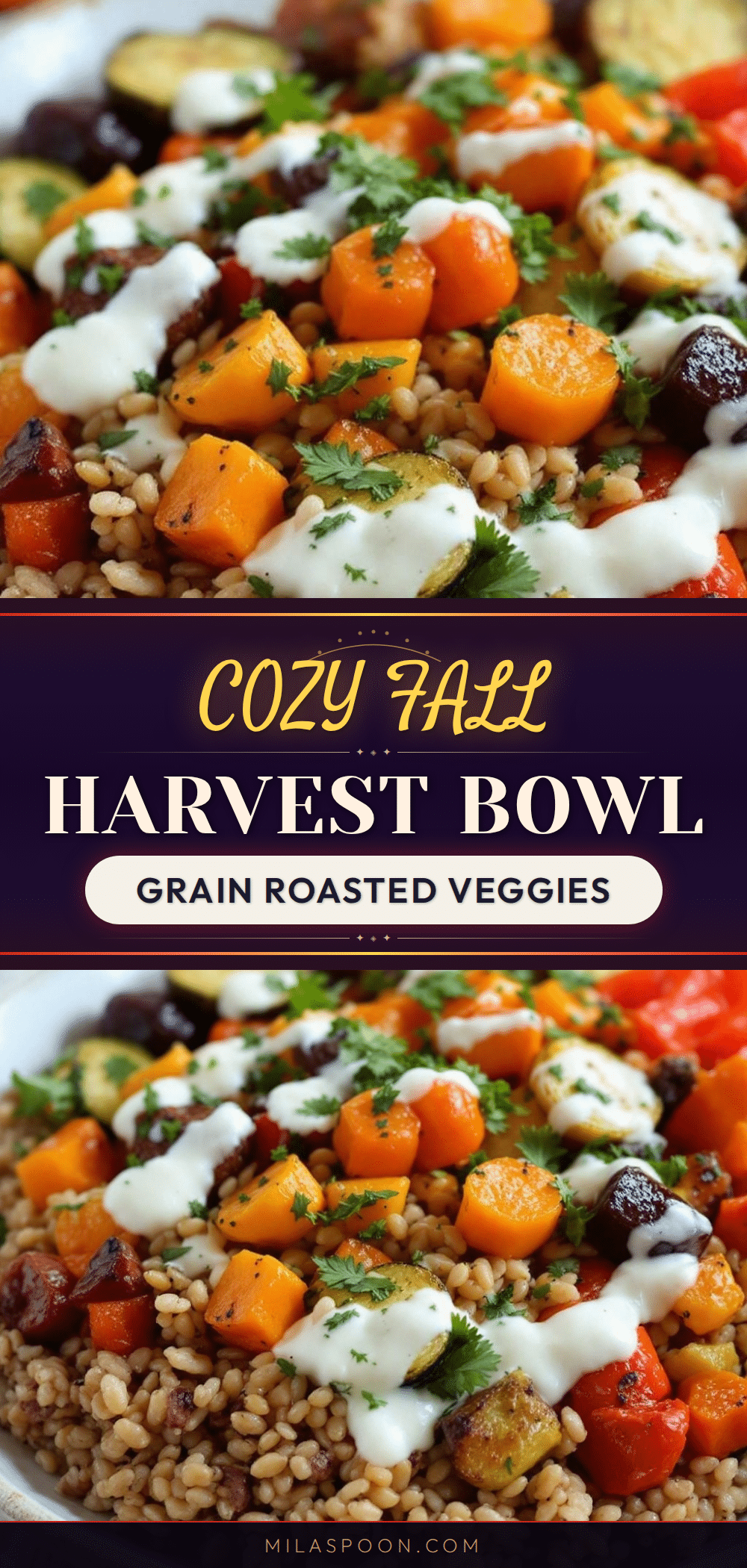
Easy Fall Harvest Grain Bowl with Roasted Vegetables
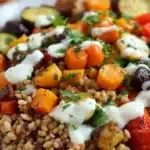
A cozy and satisfying grain bowl featuring roasted butternut squash, sweet potatoes, and red onion over chewy farro, all drizzled with a creamy maple-tahini dressing. Perfect for a quick weeknight dinner or meal prep.
- Prep Time: 15 minutes
- Cook Time: 30 minutes
- Total Time: 45 minutes
- Yield: 4 servings 1x
- Category: Main Course
- Cuisine: American
Ingredients
- 1 medium butternut squash, peeled and cubed (about 3 cups)
- 2 medium sweet potatoes, cubed (about 2 cups)
- 1 red onion, cut into wedges
- 3 tablespoons olive oil
- 1 teaspoon dried sage
- 1 teaspoon smoked paprika
- ½ teaspoon garlic powder
- Salt and black pepper to taste
- 1 cup farro (pearled preferred)
- 2 cups vegetable broth or water
- Pinch of salt
- ¼ cup tahini
- 2 tablespoons maple syrup
- 2 tablespoons lemon juice
- 2–3 tablespoons warm water
- 1 small garlic clove, minced
- ¼ teaspoon salt
- ¼ cup pepitas (pumpkin seeds)
- ¼ cup dried cranberries
- 2 tablespoons fresh parsley, chopped
- Optional: ¼ cup crumbled feta or goat cheese
Instructions
- Preheat your oven to 425°F (220°C). Line a large baking sheet with parchment paper.
- Cook the farro: Rinse 1 cup farro under cold water. In a medium saucepan, combine farro with 2 cups vegetable broth or water and a pinch of salt. Bring to a boil, then reduce to a simmer, cover, and cook for 25-30 minutes (pearled farro) or 40-45 minutes (whole farro) until tender but chewy. Drain excess liquid and fluff with a fork. Set aside.
- Prep the vegetables: Peel and cube butternut squash and sweet potatoes into ¾-inch cubes. Cut red onion into 8 wedges through the root end.
- Season and roast: In a large bowl, toss cubed squash, sweet potatoes, and onion wedges with olive oil, dried sage, smoked paprika, garlic powder, salt, and pepper. Spread in a single layer on the prepared baking sheet. Roast for 25-30 minutes, flipping halfway, until tender and caramelized.
- Make the dressing: In a small bowl, whisk together tahini, maple syrup, lemon juice, minced garlic, and salt. Add warm water 1 tablespoon at a time until pourable. Adjust seasoning to taste.
- Toast the pepitas: In a small dry skillet over medium heat, toast pepitas for 2-3 minutes until they start to pop and smell nutty. Remove from heat immediately.
- Assemble the bowls: Divide cooked farro among serving bowls. Top with roasted vegetables. Drizzle with maple-tahini dressing. Sprinkle with toasted pepitas, dried cranberries, fresh parsley, and optional cheese. Serve warm or at room temperature.
Notes
For best results, flip vegetables halfway through roasting to ensure even caramelization. Let farro cool slightly before adding dressing to prevent it from thinning. For meal prep, store dressing separately and add just before serving. The bowl can be stored in the refrigerator for up to 4 days; reheat in a skillet with a splash of water for best texture.
Nutrition
- Serving Size: 1 bowl
- Calories: 450
- Sugar: 18
- Sodium: 450
- Fat: 18
- Saturated Fat: 2.5
- Carbohydrates: 65
- Fiber: 12
- Protein: 12
Keywords: fall harvest grain bowl, roasted vegetables, farro bowl, maple tahini dressing, healthy bowl, vegetarian, meal prep