Love this? Save it for later!
Share the inspiration with your friends
The first time I made this, it was a Tuesday night and I had exactly forty-five minutes between getting home from the grocery store and needing dinner on the table. I had chicken breasts thawed in the fridge, a lemon that was about to go soft, and honestly, I was tired of scrubbing pans. I just stood there staring into the skillet, thinking about how many dishes I’d have to wash if I made my usual lemon chicken with a separate pan for the sauce. So I didn’t. I threw everything into one hot pan, crossed my fingers, and hoped the garlic wouldn’t burn. It didn’t. The chicken came out tender, the butter sauce turned glossy and thick, and my husband ate two servings without saying a word — which, if you know him, is basically a standing ovation. That night, I scribbled the proportions on a sticky note and taped it inside my spice cabinet. It’s been there ever since, smudged and splattered and completely perfect. This easy one-pan lemon garlic butter chicken is the kind of recipe you don’t need to think twice about. You just make it, and it works.
Why You’ll Love This Recipe
I’ve tested this recipe more times than I care to admit — different pan sizes, different butter temperatures, different lemon-to-garlic ratios. What I ended up with is the version that works every single time, no matter how distracted you are while cooking.
- One Pan, Minimal Mess : Everything cooks in a single skillet. You sear the chicken, build the sauce, and finish cooking all in the same pan. Less scrubbing, more eating.
- Simple Pantry Ingredients : You need chicken, butter, garlic, lemon, and a few basic seasonings. No specialty items, no obscure spices, no last-minute store runs.
- Ready in Under 30 Minutes : From the moment you turn on the stove to the moment you sit down, it takes about 25 minutes. That’s faster than takeout delivery.
- Perfect for Busy Weeknights : This is the dinner you make when you’re tired, hungry, and need something that feels like a real meal without feeling like a project.
- Crowd-Pleaser : I’ve served this to picky kids, skeptical in-laws, and friends who claim they don’t like chicken. Every single plate came back clean.
What makes this different from other lemon chicken recipes is the technique. Most versions either burn the garlic or make a sauce that’s too thin. Here, you add the garlic after the butter melts but before it browns, and you let the lemon juice reduce just enough to thicken naturally. The result is a sauce that clings to the chicken instead of pooling on the plate. It’s not just another chicken dinner — it’s the one you’ll keep coming back to.
There’s something about that first bite — the way the butter hits your tongue, followed by the bright pop of lemon, then the mellow warmth of garlic. It’s comfort food that doesn’t weigh you down. It’s the kind of meal that makes a regular Tuesday feel a little bit special.
What Ingredients You Will Need
This recipe uses simple, everyday ingredients that come together to create something genuinely satisfying. Nothing fancy, nothing fussy — just good food that works.
- Boneless, skinless chicken breasts (1.5 lbs or about 680g) — Look for breasts that are roughly even in thickness so they cook uniformly. If they’re too thick, you can butterfly them or pound them to about ¾ inch. I prefer organic chicken when I can find it, but standard grocery store chicken works perfectly fine here.
- Unsalted butter (4 tablespoons, 56g) — Using unsalted butter lets you control the salt level yourself. If you only have salted butter on hand, just reduce the added salt by about ¼ teaspoon. Kerrygold is my go-to for flavor, but any good-quality butter will do.
- Garlic (5 cloves, minced) — Fresh garlic is non-negotiable here. Pre-minced garlic from a jar has a different flavor profile and tends to burn faster. Take the extra minute to mince fresh cloves — it makes a real difference.
- Fresh lemon (1 large lemon) — You’ll use both the zest and the juice. Zest the lemon before juicing it — it’s much easier that way. Look for lemons that feel heavy for their size; they have more juice.
- Chicken broth (½ cup, 120ml) — Low-sodium broth is best here so you can control the salt. If you only have regular broth, just taste before adding extra salt at the end.
- All-purpose flour (2 tablespoons, 16g) — This helps thicken the sauce slightly and gives it a silky texture. You can substitute with cornstarch (1 tablespoon mixed with 2 tablespoons cold water) if you need a gluten-free option.
- Olive oil (1 tablespoon, 15ml) — Used for searing the chicken. It has a higher smoke point than butter, so it prevents burning while still adding richness.
- Salt (1 teaspoon, plus more to taste) — I use fine sea salt for even seasoning. Diamond Crystal kosher salt is also excellent — use about 1½ teaspoons if you go that route.
- Black pepper (½ teaspoon, freshly ground) — Freshly ground pepper has more aroma than pre-ground. It’s a small detail that adds up.
- Dried thyme (½ teaspoon) — Thyme and lemon are a classic pairing. If you have fresh thyme, use about 1 teaspoon of leaves.
- Paprika (½ teaspoon) — This is mostly for color, but it adds a subtle warmth that rounds out the flavor. Smoked paprika works beautifully here too.
- Fresh parsley (2 tablespoons, chopped, for garnish) — Optional, but it adds a fresh finish and a pop of green. Flat-leaf parsley has more flavor than curly.
Ingredient Substitutions : If you’re out of chicken broth, you can use white wine (dry, like Sauvignon Blanc) for a more complex sauce. For a dairy-free version, substitute the butter with a high-quality vegan butter or ghee if you tolerate it. The texture will be slightly different, but it still tastes great.
Equipment Needed
You don’t need a lot of fancy tools for this recipe. Here’s what you’ll actually use:
- Large skillet (12-inch, preferably stainless steel or cast iron) — Non-stick works too, but you won’t get as much fond (those browned bits) for the sauce. Cast iron gives you the best sear and the richest sauce.
- Sharp chef’s knife — For mincing garlic and chopping parsley. A dull knife makes prep frustrating and can lead to uneven cuts.
- Cutting board — I prefer wood or bamboo, but any sturdy board works.
- Tongs — For flipping the chicken without piercing it. Piercing releases juices and makes the meat dry.
- Microplane or fine grater — For zesting the lemon. A box grater’s smallest holes work in a pinch.
- Measuring spoons and cups — For accuracy, especially with the flour and broth.
- Small whisk or fork — For whisking the flour into the broth to prevent lumps.
- Instant-read thermometer (optional but recommended) — Chicken is perfectly cooked at 165°F (74°C). A thermometer takes the guesswork out.
If you don’t have a cast iron skillet, don’t stress. I’ve made this in a stainless steel pan and even a well-seasoned non-stick pan, and it works beautifully. Just make sure the pan is large enough that the chicken pieces aren’t crowded — overcrowding steams instead of sears.
Preparation Method
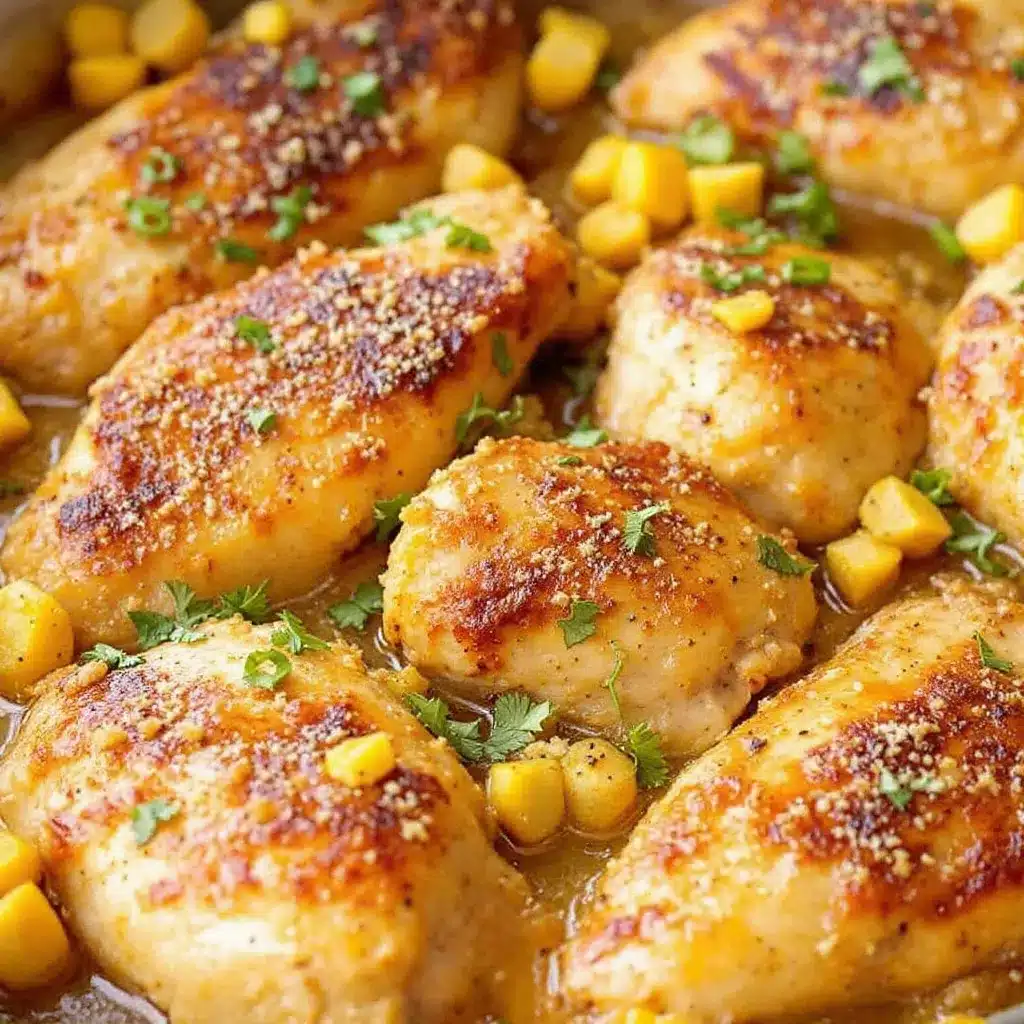
- Prep the chicken — Pat the chicken breasts dry with paper towels. This is crucial — wet chicken won’t sear properly. Season both sides generously with salt, pepper, paprika, and dried thyme. Let them sit at room temperature for about 10 minutes while you prep the other ingredients. This helps the seasoning adhere and allows the chicken to cook more evenly.
- Zest and juice the lemon — Using a microplane, zest the entire lemon before cutting it in half. You want about 1 teaspoon of zest. Then juice the lemon — you should get about 2-3 tablespoons of juice. Set both aside separately.
- Mince the garlic — Peel 5 cloves of garlic and mince them finely. Not a rough chop — you want small, even pieces so they cook quickly without burning. If your garlic has green sprouts in the center, remove them; they can be bitter.
- Mix the broth slurry — In a small bowl, whisk the chicken broth with 2 tablespoons of all-purpose flour until completely smooth. No lumps allowed. Set this aside near the stove so you can add it quickly later.
- Heat the pan — Place your skillet over medium-high heat and add 1 tablespoon of olive oil. Let it heat until the oil shimmers — about 2 minutes. You want the pan hot enough that the chicken sizzles immediately when it hits the surface.
- Sear the chicken — Carefully place the seasoned chicken breasts in the hot pan. Don’t move them for 4-5 minutes. Let them develop a deep golden-brown crust. You’ll know they’re ready to flip when they release easily from the pan — if they stick, they need more time. Flip and cook for another 3-4 minutes on the second side. The chicken should be golden on both sides but not cooked all the way through yet. Transfer the chicken to a plate and set aside.
- Start the sauce — Reduce the heat to medium-low. Add 4 tablespoons of unsalted butter to the same pan. Let it melt, scraping up any browned bits from the bottom of the pan with a wooden spoon or spatula. Those bits are pure flavor — don’t leave them behind.
- Cook the garlic — Once the butter is melted and bubbling, add the minced garlic. Stir constantly for about 30-45 seconds, until the garlic is fragrant but not brown. Burnt garlic tastes bitter and will ruin the sauce, so watch it carefully.
- Add the lemon and broth — Pour in the lemon juice and give it a stir. Let it bubble for about 30 seconds, then pour in the flour-broth mixture while whisking continuously. Add the lemon zest too. Keep whisking until the sauce thickens — about 2-3 minutes. It should coat the back of a spoon.
- Return the chicken to the pan — Place the seared chicken breasts back into the skillet, nestling them into the sauce. Spoon some of the sauce over the tops of the chicken. Reduce the heat to low, cover the pan, and let it cook for 8-10 minutes, or until the chicken reaches an internal temperature of 165°F (74°C).
- Rest and serve — Remove the pan from the heat. Let the chicken rest in the sauce for 5 minutes — this allows the juices to redistribute. Garnish with fresh parsley and serve immediately.
Sensory cues to look for : When the chicken is searing, you should hear a steady, enthusiastic sizzle. If it’s quiet, the pan isn’t hot enough. When the garlic hits the butter, the kitchen should smell aromatic and inviting — not sharp or acrid. The finished sauce should be glossy and thick enough that it doesn’t run off the chicken like water.
Cooking Tips & Techniques
I’ve made this recipe probably thirty times by now, and I’ve messed it up plenty along the way. Here’s what I’ve learned:
Don’t crowd the pan. If your skillet is too small and the chicken pieces are touching, they’ll steam instead of sear. You want that golden crust — it adds texture and flavor. If necessary, cook the chicken in two batches. It adds a few minutes but makes a big difference.
Let the chicken come to room temperature. I know it’s tempting to cook cold chicken straight from the fridge, but cold meat sears unevenly. Ten minutes on the counter makes a noticeable difference in how evenly the chicken cooks.
Watch the garlic like a hawk. This is the mistake I made the most in my early attempts. Garlic goes from fragrant to burnt in about 15 seconds. If you’re multitasking and look away, you’ll end up with bitter sauce. Stay present during this step.
Use a thermometer. I used to cut into chicken to check if it was done, which released all the juices and left me with dry meat. An instant-read thermometer changed everything. Insert it into the thickest part of the breast — 165°F (74°C) is your target. If you don’t have one, look for juices running clear and the meat feeling firm but not hard when pressed.
Taste the sauce before serving. Lemons vary in acidity, and broths vary in saltiness. A quick taste test lets you adjust before you serve. If the sauce is too tart, add a pinch of sugar. If it’s too salty, add a splash of water or broth.
Multitasking strategy : While the chicken sears, zest and juice the lemon and mince the garlic. While the sauce simmers, chop the parsley. This way, everything flows without rushing.
Variations & Adaptations
This recipe is flexible, and I’ve tried several variations over the years. Here are my favorites:
Creamy Lemon Garlic Butter Chicken — After adding the broth mixture, stir in ¼ cup of heavy cream or half-and-half. Let it simmer for an extra 2 minutes until thickened. The cream mellows the lemon and makes the sauce luxuriously rich. This version is especially good served over mashed potatoes.
Spicy Lemon Garlic Chicken — Add ½ teaspoon of red pepper flakes along with the garlic. The heat pairs surprisingly well with the bright lemon and rich butter. I make this version when I want something with a little kick.
Herb-Infused Version — Add 2 sprigs of fresh rosemary or 3 sprigs of fresh thyme to the pan when you return the chicken. The herbs infuse the sauce as it simmers, and you can remove them before serving. This is my go-to for Sunday dinners when I have a little more time.
Chicken Thigh Variation — Substitute boneless, skinless chicken thighs for the breasts. Thighs are more forgiving and stay juicy even if you overcook them slightly. Sear them for 4-5 minutes per side, then simmer for 12-15 minutes in the sauce.
Low-Carb/Keto Adaptation — Skip the flour and use 1 tablespoon of almond flour mixed with the broth, or simply let the sauce reduce naturally without any thickener. The sauce will be thinner but still flavorful. Serve with roasted vegetables or cauliflower rice.
Air Fryer Method — Sear the chicken in the air fryer at 400°F (200°C) for 8 minutes, flipping halfway. While it cooks, make the sauce in a small saucepan on the stovetop. Toss the cooked chicken in the sauce before serving. This is great when you want to free up stovetop space.
Serving & Storage Suggestions
Serving : This chicken is best served hot, straight from the pan. Spoon extra sauce over each piece before serving. It pairs beautifully with simple sides that soak up the sauce — think crusty bread, rice, or pasta. I also love it alongside creamy cucumber dill salad for a refreshing contrast, or with a side of roasted tomato basil soup for a cozy, complete meal. For a lighter option, serve it over a bed of arugula with shaved Parmesan.
Storage : Store leftover chicken and sauce in an airtight container in the refrigerator for up to 4 days. The flavors actually deepen overnight, so leftovers can taste even better the next day. Reheat gently on the stovetop over low heat, adding a splash of broth or water if the sauce has thickened too much. You can also reheat individual portions in the microwave for 1-2 minutes.
Freezing : This recipe freezes well for up to 3 months. Place the cooled chicken and sauce in a freezer-safe container, leaving a little room for expansion. Thaw overnight in the refrigerator before reheating. The sauce may separate slightly after freezing — just whisk it back together as it reheats.
Make-Ahead Tip : You can sear the chicken and make the sauce up to 2 days in advance. Store them separately in the refrigerator, then combine and simmer gently before serving. This is a lifesaver when you’re hosting dinner and want to minimize last-minute cooking.
Nutritional Information & Benefits
Per serving (based on 4 servings, using 1.5 lbs chicken):
- Calories : Approximately 380-420
- Protein : 38-42g
- Fat : 22-26g
- Carbohydrates : 6-8g
- Fiber : 0.5g
- Sugar : 1-2g
- Sodium : 650-750mg (varies based on broth and added salt)
This dish is naturally high in protein, which supports muscle repair and keeps you feeling full. Chicken breast is a lean source of protein, while the butter provides fat-soluble vitamins A, D, E, and K. Lemons are packed with vitamin C and antioxidants, which support immune health. Garlic has been studied for its anti-inflammatory and heart-health benefits. If you’re watching your sodium, use low-sodium broth and go easy on the added salt — you can always add more at the table.
This recipe is naturally gluten-free if you substitute the flour with cornstarch or almond flour. It’s also nut-free, egg-free, and can be made dairy-free with vegan butter. As always, check your specific ingredient labels if you have allergies or dietary restrictions.
Conclusion
This easy one-pan lemon garlic butter chicken has become my go-to for a reason. It’s simple enough for a Tuesday night, but impressive enough that I’ve served it to dinner guests without a second thought. The sauce is bright and rich, the chicken stays tender, and the whole thing comes together in one pan with minimal effort.
I love that it’s forgiving — you can tweak the herbs, swap the protein, or add cream, and it still works. It’s the kind of recipe that builds confidence in the kitchen because it delivers every single time.
I’d love to hear how it turns out for you. Did you add your own twist? Serve it with something unexpected? Let me know in the comments below — and if you loved it, share it with someone who needs an easy, reliable dinner in their rotation.
Now go make some chicken. You’ve got this.
Frequently Asked Questions
Can I use chicken thighs instead of breasts?
Absolutely. Boneless, skinless chicken thighs work beautifully in this recipe. They’re more forgiving than breasts and stay juicy even if you cook them a few minutes longer. Sear them for 4-5 minutes per side, then simmer in the sauce for 12-15 minutes until they reach 175°F (80°C).
How do I prevent the garlic from burning?
Lower the heat to medium-low before adding the garlic, and stir it constantly. Garlic only needs about 30-45 seconds in hot butter before it becomes fragrant. If you see it turning brown, remove the pan from the heat immediately and add a splash of broth to cool things down.
Can I make this dairy-free?
Yes. Substitute the butter with a high-quality vegan butter or ghee (if you tolerate it). The texture will be slightly different, but the flavor will still be delicious. Just make sure to use a vegan butter that performs well in high heat.
What should I serve with this chicken?
The sauce is the star here, so serve it with something that soaks it up. White rice, crusty bread, pasta, mashed potatoes, or cauliflower rice all work wonderfully. A simple green salad or roasted vegetables on the side rounds out the meal nicely.
Can I double this recipe?
You can, but you’ll need a larger pan or you’ll need to cook the chicken in batches. Crowding the pan prevents proper searing, which means less flavor in the sauce. If you’re doubling, I recommend using two pans or cooking the chicken in two rounds and combining everything at the end.
Pin This Recipe!
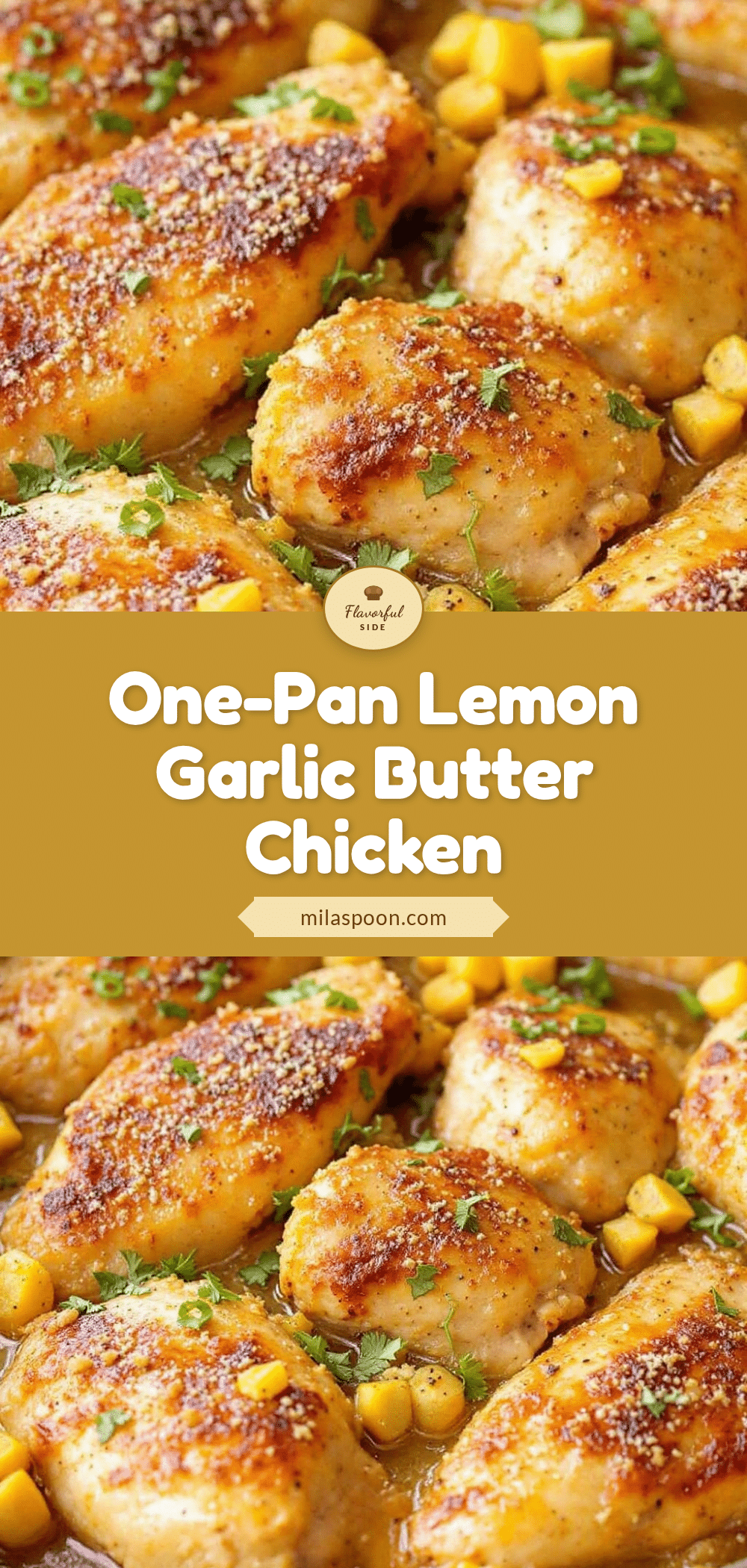
Easy One-Pan Lemon Garlic Butter Chicken

Tender chicken breasts seared golden brown, then simmered in a rich, glossy lemon garlic butter sauce — all made in a single skillet in under 30 minutes. This is the kind of recipe you don’t need to think twice about; you just make it, and it works.
- Prep Time: 10 minutes
- Cook Time: 20 minutes
- Total Time: 30 minutes
- Yield: 4 servings 1x
- Category: Main Course
- Cuisine: American
Ingredients
- 1.5 lbs (about 680g) boneless, skinless chicken breasts
- 4 tablespoons (56g) unsalted butter
- 5 cloves garlic, minced
- 1 large lemon (zest and juice)
- ½ cup (120ml) low-sodium chicken broth
- 2 tablespoons (16g) all-purpose flour
- 1 tablespoon (15ml) olive oil
- 1 teaspoon fine sea salt (plus more to taste)
- ½ teaspoon freshly ground black pepper
- ½ teaspoon dried thyme
- ½ teaspoon paprika
- 2 tablespoons fresh parsley, chopped (for garnish)
Instructions
- Pat the chicken breasts dry with paper towels. Season both sides generously with salt, pepper, paprika, and dried thyme. Let them sit at room temperature for about 10 minutes.
- Zest the entire lemon (about 1 teaspoon zest), then juice it (about 2-3 tablespoons juice). Set both aside separately.
- Peel and finely mince 5 cloves of garlic.
- In a small bowl, whisk the chicken broth with 2 tablespoons of all-purpose flour until completely smooth. Set aside.
- Place a large skillet (12-inch, preferably stainless steel or cast iron) over medium-high heat and add 1 tablespoon olive oil. Heat until the oil shimmers, about 2 minutes.
- Carefully place the seasoned chicken breasts in the hot pan. Sear without moving for 4-5 minutes, until deep golden brown. Flip and cook for another 3-4 minutes. Transfer chicken to a plate and set aside.
- Reduce heat to medium-low. Add 4 tablespoons unsalted butter to the same pan. Let it melt, scraping up any browned bits from the bottom.
- Add the minced garlic and stir constantly for 30-45 seconds, until fragrant but not brown.
- Pour in the lemon juice and stir. Let it bubble for about 30 seconds, then pour in the flour-broth mixture while whisking continuously. Add the lemon zest. Keep whisking until the sauce thickens, about 2-3 minutes.
- Return the seared chicken breasts to the skillet, nestling them into the sauce. Spoon some sauce over the tops. Reduce heat to low, cover, and cook for 8-10 minutes, or until chicken reaches an internal temperature of 165°F (74°C).
- Remove from heat. Let the chicken rest in the sauce for 5 minutes. Garnish with fresh parsley and serve immediately.
Notes
Don’t crowd the pan — cook chicken in batches if needed. Let chicken come to room temperature before cooking for even searing. Watch garlic carefully to prevent burning. Use an instant-read thermometer for perfectly cooked chicken. Taste sauce before serving and adjust seasoning. For a creamy version, stir in ¼ cup heavy cream after adding broth. For spicy version, add ½ teaspoon red pepper flakes with garlic. Leftovers keep in the refrigerator for up to 4 days and freeze for up to 3 months.
Nutrition
- Serving Size: 1 serving (about 6 o
- Calories: 400
- Sugar: 1.5
- Sodium: 700
- Fat: 24
- Saturated Fat: 12
- Carbohydrates: 7
- Fiber: 0.5
- Protein: 40
Keywords: one-pan chicken, lemon garlic butter chicken, easy chicken dinner, weeknight chicken, skillet chicken, 30-minute meal