Love this? Save it for later!
Share the inspiration with your friends
Introduction
“Grab the orange juice, and don’t forget the champagne!” That’s the text I sent my best friend an hour before our impromptu brunch last year. Honestly, I wasn’t planning anything fancy—just a quick way to turn a chaotic weekend morning into something a little more festive. But as I started pulling out bottles, fresh fruit, and a few unexpected juices, this idea for a National Mimosa Day bar setup was born. What began as a simple, last-minute fix quickly turned into a delicious ritual that everyone at the table kept raving about.
It wasn’t just the bubbly or the tangy citrus that caught me off guard; it was how easy it was to mix and match flavors that made every glass feel special. Each sip offered a little surprise—whether it was the zing of blood orange or the subtle sweetness of peach nectar. Let’s face it, mimosas are the kind of drink that bring people together, but setting up a colorful, tasty bar with just five flavor combos made it downright unforgettable.
So if you’ve ever found yourself staring at a bottle of champagne wondering how to celebrate National Mimosa Day without the fuss, this setup is your answer. It’s approachable, fun, and flexes perfectly whether you’re hosting a crowd or just treating yourself. Plus, once you’ve tried these combos, you might find yourself making this bar a regular weekend habit. Because, honestly, who doesn’t want a little sparkle in their morning?
Why You’ll Love This Recipe
After testing countless variations, tweaking juice ratios, and even sneaking in some unexpected ingredients, I can confidently say this National Mimosa Day bar setup is a winner. Here’s why it stands out:
- Quick & Easy: Comes together in under 15 minutes, perfect for busy mornings or last-minute celebrations.
- Simple Ingredients: No need for exotic juices or specialty stores—most ingredients are pantry staples or easy to find.
- Perfect for Any Occasion: Whether it’s a casual brunch, a holiday gathering, or a virtual party, these mimosas bring a festive vibe effortlessly.
- Crowd-Pleaser: The variety appeals to all tastes, from classic orange to something a little fruity or floral.
- Unbelievably Delicious: Balanced sweetness, fresh flavors, and just the right fizz make every glass feel indulgent.
This isn’t just another mimosa recipe floating around the internet. What makes this bar setup special is the thoughtful combination of flavors—like adding a splash of elderflower for a floral note or swapping in grapefruit juice for a citrus twist. Plus, I’ve learned that chilling every ingredient beforehand is a game-changer, keeping the bubbles lively and refreshing.
Honestly, these combos are the kind of drinks that make you pause and appreciate the small moments. They bring a little joy, a little sparkle, and maybe even a few laughs when someone discovers their new favorite mix. For me, this bar setup sticks around because it’s more than just drinks; it’s about making memories without hassle.
What Ingredients You Will Need
This National Mimosa Day bar setup uses simple, fresh ingredients to create a lively, flavorful experience without the fuss. You’ll find these are mostly pantry staples or easy additions from your local grocery store.
- Base Bubbles:
- Brut Champagne or Prosecco (750 ml bottle) – I prefer Veuve Clicquot for its crispness, but any dry sparkling wine works.
- Chilled sparkling water or club soda (optional, for lighter mimosas)
- Classic Citrus:
- Freshly squeezed orange juice (about 2 cups / 480 ml) – Use Valencia oranges for the best natural sweetness.
- Blood orange juice (optional, 1 cup / 240 ml) – Adds a vibrant color and deeper citrus flavor.
- Fruity Twists:
- Peach nectar (1 cup / 240 ml) – Rich and smooth, look for unsweetened or lightly sweetened for balance.
- Cranberry juice cocktail (1 cup / 240 ml) – Adds a tart, festive note; avoid 100% juice for a sweeter finish.
- Pineapple juice (1 cup / 240 ml) – Tropical and bright, fresh or canned both work well.
- Floral & Herbaceous:
- Elderflower liqueur (1/4 cup / 60 ml) – Optional but highly recommended for a delicate floral lift.
- Fresh mint leaves or edible flowers (for garnish)
- Extras & Garnishes:
- Fresh berries (strawberries, raspberries, or blueberries) – Great for adding a pop of color and flavor.
- Thin orange or lemon slices – For a classic look and subtle citrus aroma.
Most of these ingredients can be mixed and matched to suit your taste or what you have on hand. For example, if you want a lighter mimosa, use sparkling water to stretch the champagne. If you’re celebrating in winter, frozen berries and cranberry juice add a festive vibe. For a seasonal touch, swapping in fresh berries or herbs can turn this simple bar into a real showstopper.
Equipment Needed
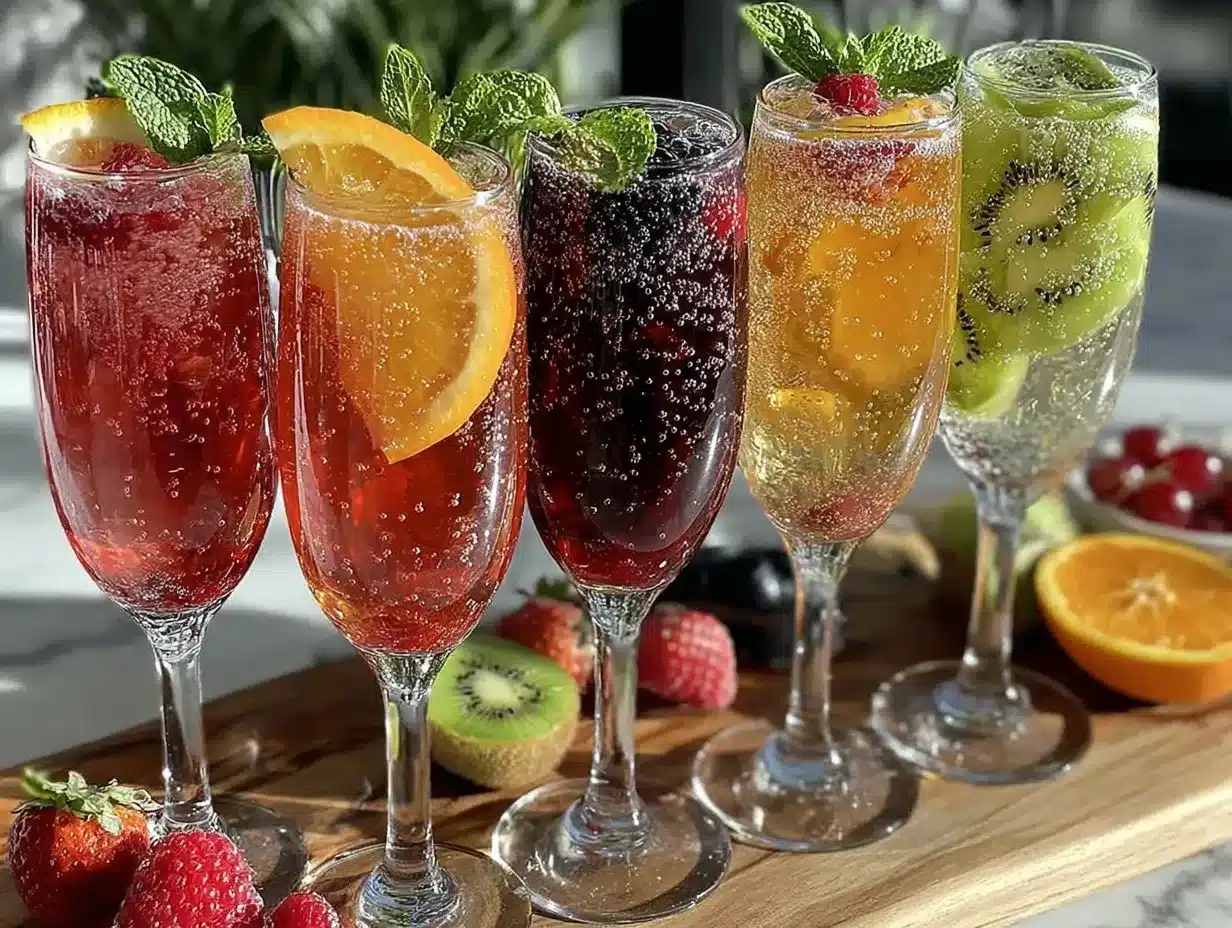
Setting up a National Mimosa Day bar is pretty straightforward, but a few tools make the process smoother and more fun.
- Champagne flutes or stemmed glasses: These help keep the bubbles intact and look elegant.
- Juice pitchers or carafes: For serving different juice options neatly and conveniently.
- Citrus juicer: A handheld or countertop juicer for fresh orange or blood orange juice. (I’ve found a manual reamer works just fine and is easy to clean.)
- Small mixing bowls or measuring cups: For premixing juices or elderflower liqueur blends.
- Ice bucket or cooler: Keeps the champagne and juices cold, which is key for mimosas.
- Small tongs or spoons: For adding berries or garnishes without messy fingers.
If you don’t have champagne flutes, regular wine glasses or even pretty tumblers work in a pinch. The juicer can be skipped if you buy pre-squeezed fresh juice, though freshly squeezed definitely tastes brighter. Budget-wise, a basic citrus press costs under $20 and can be used for other recipes, making it a worthwhile investment.
Preparation Method
- Chill Your Ingredients: Place the champagne or sparkling wine and all juices in the refrigerator for at least 2 hours before serving. Cold ingredients keep the bubbles lively longer.
- Juice the Oranges: If using fresh oranges, juice about 4 to 5 medium-sized oranges to get 2 cups (480 ml) of orange juice. Strain if desired to remove pulp. Fresh juice really brightens the flavor.
- Set Up the Bar: Arrange the champagne, juices, elderflower liqueur, and garnishes on a table or countertop. Use pitchers or clear glasses for the juices so guests can see the colors.
- Prepare Garnishes: Wash berries and mint leaves. Slice oranges or lemons thinly for garnish. Place these in small bowls or plates with tongs or spoons nearby.
- Mix Flavor Combos: For each mimosa flavor, pre-mix juices with elderflower liqueur or sparkling water if using. For example, mix peach nectar with a splash of elderflower for a floral twist.
- Pour & Serve: To build a mimosa, fill the glass halfway with your preferred juice mix, then top with champagne (about 4 oz / 120 ml juice, 4 oz / 120 ml champagne). Garnish as desired.
- Encourage Creativity: Let guests experiment with combinations, but remind them to pour champagne last to preserve the bubbles.
Pro tip: Avoid stirring the mimosa after pouring—it can flatten the fizz. Instead, gently swirl the glass if you want to mix flavors evenly. If you’re prepping for a crowd, having pre-mixed juices on hand speeds things up, but keeping the champagne chilled until serving is key. I’ve learned that a little patience with chilling the ingredients makes the biggest difference between a fizzy, fresh mimosa and a flat one.
Cooking Tips & Techniques
Making a perfect mimosa bar is more about attention to detail than complicated techniques. Here are some tips I’ve picked up:
- Chill Everything: The bubbles last longer and taste better when the champagne and juices are ice-cold.
- Pour Champagne Last: Always add the sparkling wine after the juices to keep the fizz alive.
- Use Dry or Extra Dry Champagne: Sweet champagnes can overpower the juices, making the drink cloying.
- Don’t Overfill Glasses: Leave room for garnishes and to avoid spills when guests pick up their drinks.
- Fresh Juice Over Bottled: Whenever possible, use fresh-squeezed juice for brightness—especially orange and blood orange.
- Mix in Small Batches: If adding elderflower or other liqueurs, mix them with juice first before pouring champagne.
I remember one brunch where I tried to save time by pre-mixing mimosas completely, including champagne, in pitchers. Big mistake—by the time the last guest got a glass, the bubbles were gone, and the drinks tasted flat. Lesson learned: keep the bubbly separate until the final pour.
Variations & Adaptations
This mimosa bar is super flexible, and I’ve enjoyed trying different spins depending on the season or dietary needs:
- Low-Sugar Option: Use sparkling water mixed with a splash of juice instead of full juice to cut down on sweetness.
- Seasonal Flavors: Swap peach nectar for fresh mango puree in summer or pomegranate juice in winter for festive color and taste.
- Herbal Infusion: Add a sprig of rosemary or basil to the glass for an aromatic twist that pairs beautifully with citrus.
- Non-Alcoholic Version: Replace champagne with sparkling white grape juice or a non-alcoholic sparkling wine for a similar vibe.
- Personal Favorite: I like mixing cranberry and orange juice with a splash of elderflower—it’s tart, sweet, and floral all at once.
For alternative methods, you can serve a mimosa punch bowl by combining juices and chilled sparkling wine in a large bowl with floating fruit slices—perfect for larger groups. Just add champagne right before serving to keep the bubbles fresh.
Serving & Storage Suggestions
Serve mimosas immediately after assembling for the best fizz and fresh flavor. Champagne flutes look elegant, but any clear glass works well to show off those beautiful colors. Garnishes like fresh berries, citrus slices, or mint add a festive touch and a pop of fresh aroma.
If you have leftovers, you can store the juice mixtures in airtight containers in the fridge for up to 24 hours. Don’t mix with champagne until ready to serve again, as carbonation will be lost. Leftover champagne can be sealed with a sparkling wine stopper and kept chilled for 1-2 days.
Reheat mimosas is a big no-no—warm bubbles just don’t have the same magic. Instead, keep everything cold and fresh to enjoy the full experience. The flavors tend to meld nicely if juices are pre-mixed a few hours ahead, but the bubbly must be poured fresh.
For pairing, these mimosas shine alongside light brunch dishes like avocado toast, smoked salmon, or even the mini lemon blueberry cheesecakes I love making for parties. The subtle sweetness of the cheesecakes complements the citrus notes beautifully.
Nutritional Information & Benefits
While mimosas are definitely a treat, here’s a rough estimate per 6 oz (180 ml) serving:
| Nutrient | Amount |
|---|---|
| Calories | 90-120 kcal (varies by juice and champagne) |
| Carbohydrates | 10-15 g (mostly from natural fruit sugars) |
| Alcohol | About 10-12% ABV per serving |
Choosing fresh juices adds vitamin C and antioxidants, especially with ingredients like blood orange and cranberry. Elderflower liqueur adds floral notes but also sugar, so use sparingly if watching intake. For gluten-free diets, champagne and juices are safe bets, but always double-check liqueur labels.
From a wellness standpoint, mimosas feel light and refreshing compared to heavier cocktails. They’re a fun way to enjoy a celebratory drink without the heaviness, especially when balanced with fresh fruit and hydration.
Conclusion
This National Mimosa Day bar setup is a simple way to add sparkle and flavor to any brunch or gathering. With just five flavorful combos, you can please a crowd or treat yourself to something special without fuss or fancy ingredients. I love how these drinks bring a little extra joy to the table—whether it’s a slow weekend morning or a last-minute get-together.
Feel free to mix, match, and make these combos your own. After all, mimosas are all about celebrating the moment and enjoying good company. If you’ve ever enjoyed a glass of bubbly with a twist, you’ll find this setup easy, approachable, and downright tasty.
So next time you’re wondering how to mark the day, remember this bar idea—and maybe pair it with some light treats like those delightful party-friendly recipes you’ve been meaning to try. Cheers to good drinks, good times, and the perfect mimosa!
FAQs
- What is the best champagne for mimosas? Dry or extra dry champagnes work best to balance the sweetness of the juices. Prosecco is also a great budget-friendly choice.
- Can I prepare mimosas ahead of time? You can pre-mix the juices and chill them, but add the champagne just before serving to keep the bubbles fresh.
- What can I use if I don’t have fresh orange juice? High-quality chilled store-bought orange juice works fine, though fresh-squeezed brightens the flavor.
- How do I make a non-alcoholic mimosa? Replace champagne with sparkling white grape juice or any sparkling non-alcoholic wine.
- Can I add other fruits or flavors? Absolutely! Try berries, mango puree, or herbs like mint for extra flair.
Pin This Recipe!
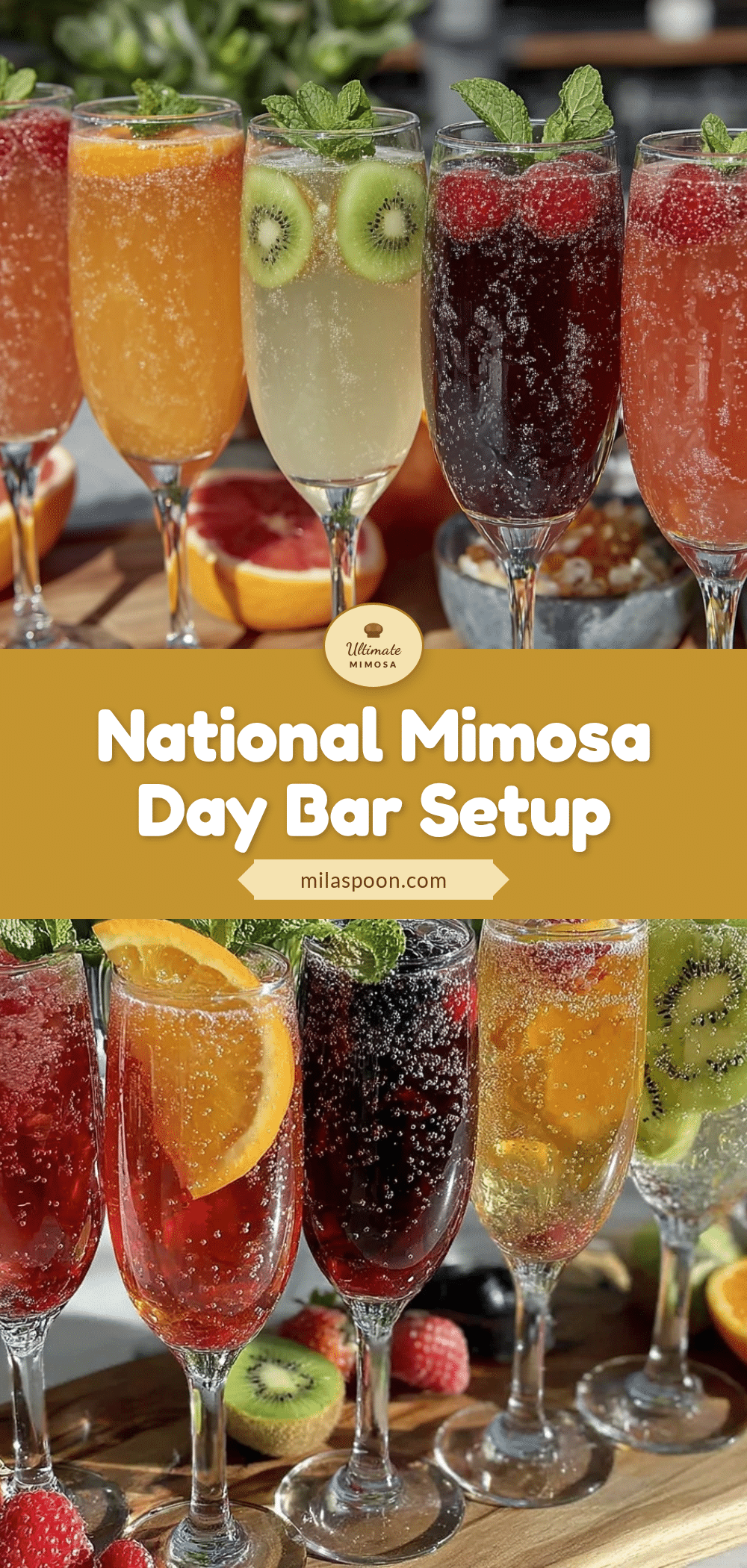
Perfect National Mimosa Day Bar Setup with 5 Easy Flavorful Combos
A simple and festive mimosa bar setup featuring five easy and flavorful combinations using champagne and a variety of fresh juices and garnishes. Perfect for brunches, gatherings, or casual celebrations.
- Prep Time: 10 minutes
- Cook Time: 0 minutes
- Total Time: 2 hours 10 minutes
- Yield: Varies (serves multiple guests depending on bottle and juice quantities)
- Category: Beverage
- Cuisine: American
Ingredients
- Brut Champagne or Prosecco (750 ml bottle)
- Chilled sparkling water or club soda (optional, for lighter mimosas)
- Freshly squeezed orange juice (about 2 cups / 16 fl oz)
- Blood orange juice (optional, 1 cup / 8 fl oz)
- Peach nectar (1 cup / 8 fl oz)
- Cranberry juice cocktail (1 cup / 8 fl oz)
- Pineapple juice (1 cup / 8 fl oz)
- Elderflower liqueur (1/4 cup / 2 fl oz, optional)
- Fresh mint leaves or edible flowers (for garnish)
- Fresh berries (strawberries, raspberries, or blueberries)
- Thin orange or lemon slices (for garnish)
Instructions
- Chill the champagne or sparkling wine and all juices in the refrigerator for at least 2 hours before serving.
- If using fresh oranges, juice about 4 to 5 medium-sized oranges to get 2 cups (16 fl oz) of orange juice. Strain if desired to remove pulp.
- Arrange the champagne, juices, elderflower liqueur, and garnishes on a table or countertop using pitchers or clear glasses for the juices.
- Wash berries and mint leaves. Slice oranges or lemons thinly for garnish and place these in small bowls or plates with tongs or spoons nearby.
- Pre-mix juices with elderflower liqueur or sparkling water if using, for each mimosa flavor combo.
- To build a mimosa, fill the glass halfway with your preferred juice mix (about 4 oz / 120 ml), then top with champagne (about 4 oz / 120 ml). Garnish as desired.
- Encourage guests to experiment with combinations but remind them to pour champagne last to preserve the bubbles.
Notes
Chill all ingredients well before serving to keep bubbles lively. Pour champagne last to preserve fizz. Avoid stirring after pouring to prevent flattening. Freshly squeezed juices brighten flavor. Pre-mix juices with elderflower or sparkling water for flavor combos but add champagne just before serving.
Nutrition
- Serving Size: 6 oz (180 ml) mimosa
- Calories: 90120
- Carbohydrates: 1015
Keywords: mimosa, mimosa bar, champagne cocktail, brunch drinks, National Mimosa Day, sparkling wine, orange juice, elderflower, festive drinks